In a nutshell
- 🧪 The science: acetic acid in distilled white vinegar dissolves limescale and soap film, restoring glass clarity gently and safely without abrasion.
- ⏱️ Five-minute method: mix 1:1 vinegar to warm water, give 60–120 seconds contact, rinse, dry fast with a microfibre cloth, then buff; use undiluted vinegar on persistent spots.
- ✨ Stubborn haze and odours: try a bicarbonate of soda + vinegar fizz for tight corners, fine salt only on sturdy glass, a 1:3 vinegar-to-water soak to neutralise odours, and a boiled‑and‑cooled water final rinse.
- ⚠️ Care and safety: brief contact on antique crystal and gilt, never mix vinegar with bleach, wipe spills off marble/limestone, and dry decanters with airflow to prevent fog and smells.
- 🌿 Sustainable and thrifty: low-cost, recyclable bottles, reusable microfibre cloths; keep a labelled 1:1 spray under the sink for quick, repeatable shine.
Cloudy wine glasses. A dull decanter. Water spots that simply won’t budge. There’s a quick fix hiding in the pantry. Distilled white vinegar, a humble staple, restores brilliant clarity in minutes, slicing through limescale and soap film without harsh chemicals or scratching. This fast method suits busy weeknights before guests arrive or the last tidy-up after a long dinner. The process is simple, low-cost, and satisfyingly effective. Time to shine: under five minutes. With the right ratio, the right cloth, and a couple of insider tricks, your stemware, tumblers, and decanters will gleam like they just left the shop.
The Science Behind Vinegar’s Sparkle
Vinegar’s cleaning power comes from acetic acid. At roughly 5% concentration in distilled white vinegar, it breaks down mineral deposits left by hard water, the stubborn culprit behind that chalky haze known as limescale. It also loosens the invisible film of detergent residue that dulls the surface of your glassware, making light scatter rather than shine. That’s why the finish looks “foggy”. Vinegar reverses it. Acid dissolves mineral build-up; clarity returns.
Crucially, vinegar is safe for most modern glass because it’s gentle compared with abrasive powders or wire wool that can etch delicate surfaces. The key is contact time. A brief soak or a thorough wipe is usually enough, letting chemistry do the heavy lifting so you don’t need to scrub. For households in hard-water areas across the UK, this becomes a quick, reliable routine: neutralise alkaline deposits with a mild acid, then rinse and dry. No scrubbing, no scratches, just science. You’ll also appreciate that there’s no synthetic fragrance left behind—only a crisp, clean sparkle.
Five-Minute Method: Step-by-Step
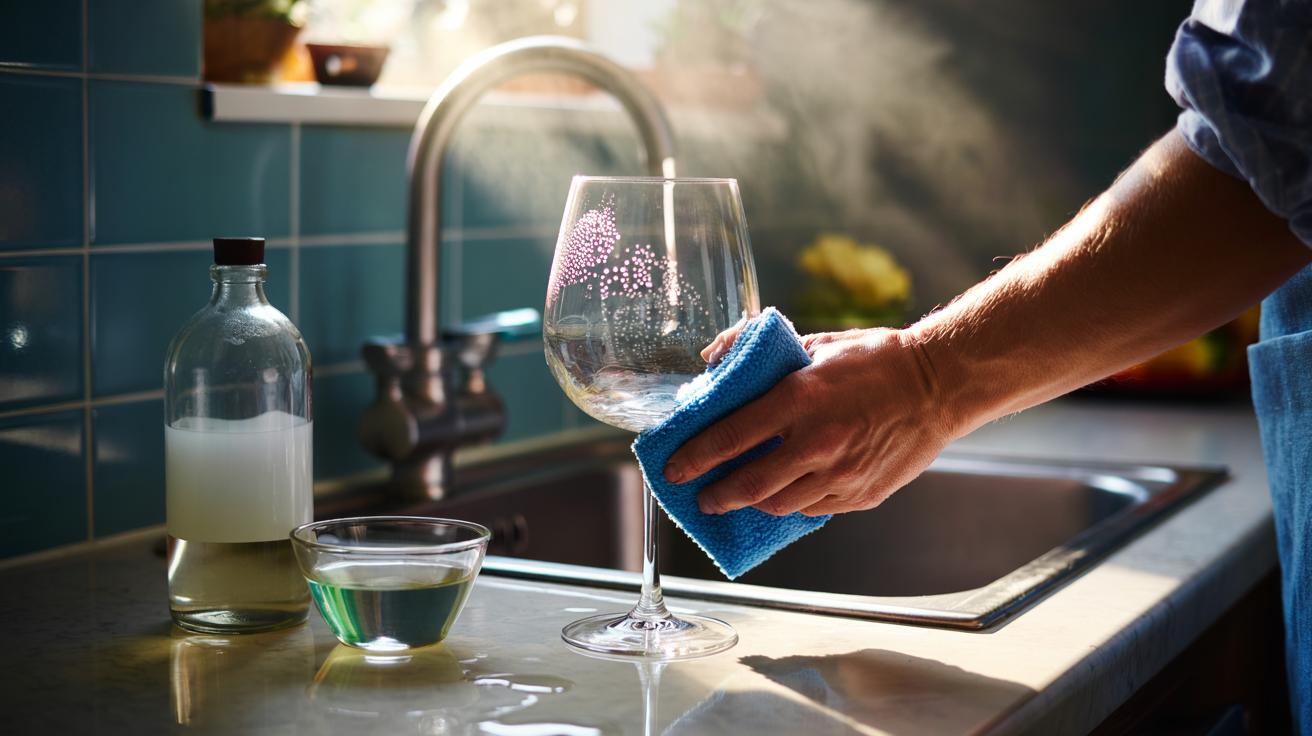
Grab your kit: distilled white vinegar, warm water, a microfibre cloth, and a lint-free tea towel. Mix a 1:1 solution of warm water and vinegar in a bowl or jug. For narrow-neck decanters, use a small funnel. Submerge or swish the glassware so the solution kisses every surface. Wait 60–90 seconds. Rotate. If heavy spotting persists, extend to two minutes. Then rinse thoroughly with warm water and dry immediately using a clean microfibre. Drying fast prevents new spots.
For streak-free brilliance, finish with a second, dry microfibre to buff. Hold the base or bowl gently—never twist stems against the base to avoid stress fractures. If a piece is heavily marked, dab undiluted vinegar onto a cloth and target the trouble spots before the general rinse. It’s that simple. The method scales from champagne flutes to chunky tumblers and carafes, and it’s kinder to your hands than harsh sprays. Five minutes. Gleam restored.
| Item/Task | Ratio/Amount | Time | Note |
|---|---|---|---|
| Vinegar solution | 1:1 vinegar to warm water | 60–120 sec | Dissolves limescale fast |
| Targeted spots | Undiluted vinegar | 30–60 sec | Buff gently; no abrasives |
| Final buff | Dry microfibre | 30–45 sec | Prevents new water marks |
Tackling Stubborn Haze and Odours
Some cloudiness is tenacious, especially inside decanters with tight shoulders. Add a spoon of bicarbonate of soda and a splash of vinegar to create a gentle fizz; that effervescence dislodges residue from awkward corners. For very fine glass, skip abrasives. For sturdier pieces, a teaspoon of fine salt swirled with vinegar can provide mild mechanical action. Always test in an inconspicuous area first. If dishwasher film persists, run a short soak in warm vinegar solution, then rinse and hand dry—auto-dry cycles can bake on minerals.
Odours from cork, old wine, or garlic can linger. Fill the vessel with a 1:3 vinegar-to-water mix and leave for three minutes before a thorough rinse. Smells neutralise quickly because acetic acid binds with volatile compounds. For tea or lipstick stains on rims, pre-wipe with undiluted vinegar, then wash as usual. To defeat tap-water streaks, use boiled-and-cooled water for the final rinse, or collect rainwater if you’re feeling thrifty. Change the water, change the result. Either way, the goal is consistent, repeatable clarity that holds up under bright kitchen lights.
Care, Safety, and Sustainability
Glass isn’t all equal. Antique stemware, cut crystal, or pieces with gilt rims deserve extra caution. Keep contact times brief and avoid soaking any decorated areas; use a damp cloth with diluted vinegar instead. Never mix vinegar with bleach or bleach-based cleaners. That combination releases hazardous gases. If your countertops are marble or limestone, wipe spills promptly—acids can etch natural stone. For decanters, use a drying rack that supports airflow; trapped moisture breeds odour and fog.
There’s a greener upside too. A litre of distilled white vinegar costs pennies per clean compared with branded sprays, arrives in recyclable bottles, and cuts down your chemical footprint. Pair it with launderable microfibre cloths to reduce disposable towels. The method is low-risk, fast, and designed for busy homes in hard-water regions. Keep a labelled spray bottle of 1:1 solution under the sink for instant touch-ups after washing up. Small habit, big shine. Do that, and you’ll rarely battle entrenched haze again—just a quick spritz, a swift buff, and you’re done.
In a world awash with specialist polishes, vinegar’s elegant simplicity stands out: cheap, effective, and kind to glass. The five-minute routine fits comfortably between laying the table and opening a bottle, rescuing foggy stems before guests even knock. It’s chemistry in service of everyday polish, not a chore, and certainly not a faff. Your glassware will look newer, feel smoother, and sparkle brighter. Ready to test it tonight, or will you tweak the mix to suit your water and routine—and what little refinements might you share once you’ve tried it?
Did you like it?4.7/5 (20)