In a nutshell
- 🍋 Lemon’s chemistry—citric acid (lowers pH, chelates minerals) plus d‑limonene (citrus solvent)—undermines grease adhesion; heat and a microfiber cloth speed release for fast degreasing.
- 🧽 Rapid method: roll and halve lemon, apply juice, dwell 1–3 minutes, use salt on the cut face for gentle abrasion, add a drop of dish soap for heavy build-up, then rinse and dry for a streak-free finish.
- 🧩 Best surfaces: glass oven doors, ceramic tiles, stainless splashbacks, enameled steel, sealed laminates; avoid natural stone and seasoned cast iron; be cautious with bare aluminium, unlacquered brass, and painted cabinets.
- ⚠️ Safety first: never mix lemon with bleach or ammonia; limit contact on sensitive finishes; skip mid-clean baking soda neutralization; always patch-test hidden areas.
- 🧪 Smart choices: lemon outperforms vinegar on oily films, complements dish soap, while citrus gels and alkaline degreasers suit baked-on residues—match cleaner, surface, and dwell time.
Stubborn kitchen grease doesn’t always need harsh chemicals or long scrubbing sessions. Reach for a lemon. Its juice, packed with citric acid and aromatic d‑limonene from the peel, attacks oily films, lifts sticky residues, and leaves a clean, bright scent. It works fast. Often within minutes. The secret lies in chemistry: acid breaks down bonds that help fats cling to surfaces, while natural citrus solvents loosen the slick layer so it can be wiped away. Add a little heat and a microfiber cloth, and you’re in business. Lemon offers speed, simplicity, and surprising muscle for everyday grease.
Why Lemon Cuts Through Grease So Quickly
Grease sticks because oils oxidize, thicken, and trap dust and food particles into a tacky matrix. Lemon tackles this on two fronts. First, citric acid lowers pH at the surface, disrupting the interactions that let oily soils bond to metal, glass, and enamel. It also chelates minerals such as calcium and magnesium, removing the invisible “hard-water film” that can anchor grime. Second, aromatic oils in the peel—especially d‑limonene—act as mild solvents, softening and lifting the residue so a cloth can pick it up.
Temperature helps. Warmed lemon juice flows into crevices, reduces viscosity, and accelerates the softening of congealed fats. A quick pre-wipe with a damp, hot cloth primes the surface; the lemon then gets to work almost immediately. On fresh splatters, contact time can be under a minute. On old, polymerized spatters near a hob, give it a few minutes and keep the surface moist to prevent premature evaporation. Speed comes from synergy: acidity plus solvent power plus heat.
It’s not magic, it’s materials science. Acids don’t “dissolve” triglycerides outright at room temperature, but they do undermine the greasy film’s adhesion and help water and surfactants emulsify loosened oils. That’s why pairing lemon with a drop of dish soap often outperforms either alone, particularly on heavy build-up where mechanical action is still required.
Step-By-Step: Rapid Lemon Degreasing Method
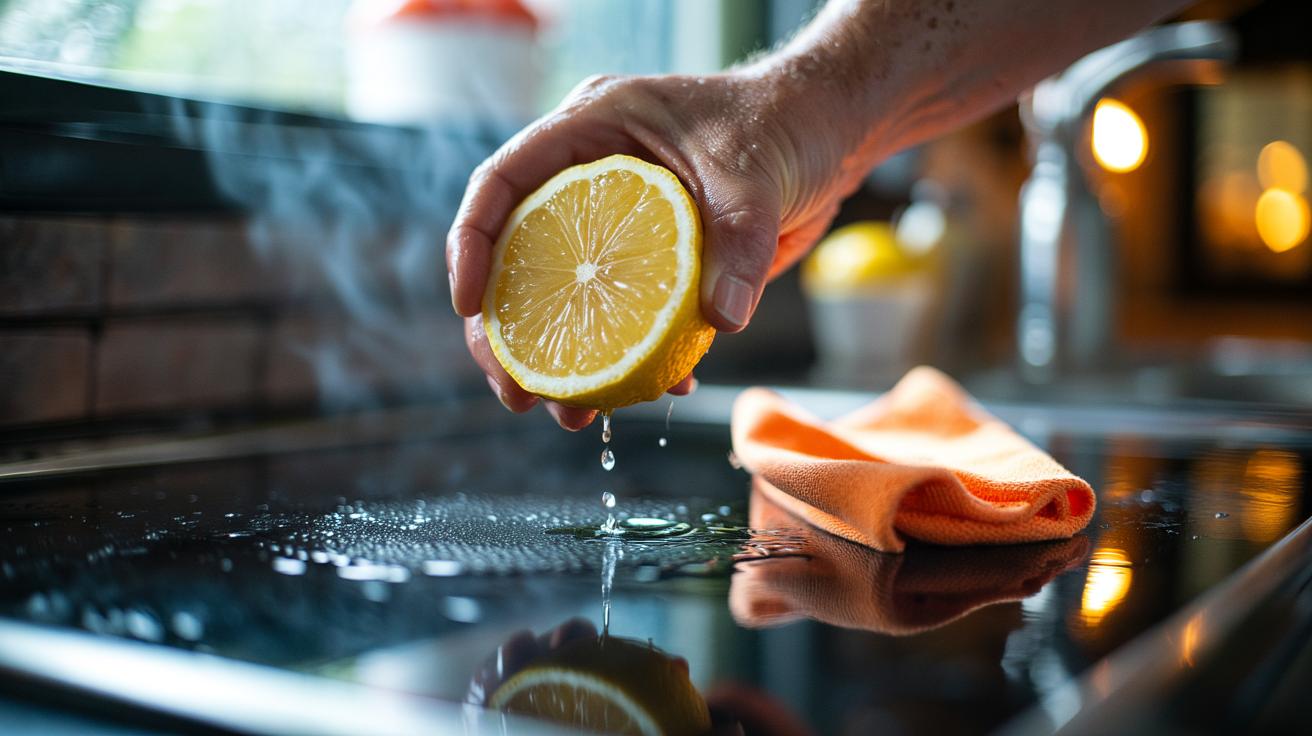
Start with the freshest lemon you have. Roll it on the counter to release more juice, then halve it. For vertical tiles or a cooker hood, warm the surface slightly with a damp, hot cloth. Squeeze juice directly onto the grime or into a trigger bottle for even coverage. For a boost, swipe the cut side across the area—this delivers both juice and a trace of peel oil. Let it dwell 60–180 seconds. Keep it glistening; if it dries, reapply lightly.
For stubborn films, sprinkle a small pinch of fine salt on the cut lemon and use gentle circular motions. The salt adds mild abrasiveness without gouging. On oven doors and stainless splashbacks, a microfiber cloth helps the emulsion lift cleanly. Add one drop of dish soap to your cloth for heavy build-up; the soap captures freed oils so they don’t smear. Wipe, then rinse with a clean damp cloth. Dry thoroughly to prevent water spots, and buff to a sheen.
Mind the pitfalls. Never mix lemon with bleach or ammonia; combining acids with those chemicals can release dangerous gases. Avoid extended contact with unsealed wood, cast-iron seasoning, and reactive metals. If you’re unsure about a finish, patch-test somewhere hidden. And don’t neutralize with heaps of baking soda mid-clean: the fizz looks impressive, but the neutralization reduces oil-cutting power; save the soda for a final deodorizing scrub if you want scent and sparkle at the end.
Where It Shines—and Where to Avoid It
Lemon is a star on glass oven doors, ceramic tiles, enameled steel, sealed laminates, and most stainless steel. It brightens, degreases, and leaves a streak-free finish when buffed dry. In the microwave, a bowl of lemon water steamed for two minutes loosens film so walls wipe clean. On plastic food containers stained with oily sauces, a quick lemon-salt rub followed by soap makes a visible difference. It’s also ideal for sink strainers and chrome taps thanks to its mineral-chelating edge.
There are red lines. Do not use lemon on natural stone—marble, limestone, travertine—or on seasoned cast iron. The acid can etch stone and strip polymerized oil coatings, leaving rough, dull patches. Exercise caution with bare aluminum and unlaquered brass; brief contact is often fine, but rinse fast to avoid tarnish. With painted cabinets, test first—some low-VOC paints soften under acids. And always remember: fast results come with dwell time measured in minutes, not hours. Overexposure increases the risk of etching sensitive materials.
Think of it as a targeted tool. Use lemon where its pH, chelating power, and citrus solvents deliver visible, quick wins; switch tactics when surfaces are delicate or when soils are carbonized rather than merely greasy. In those cases, a gel degreaser or an alkaline cleaner used carefully may be the safer, faster route.
Quick Reference: Lemon Versus Common Degreasers
Choosing the right cleaner saves time and prevents damage. Lemon excels on everyday kitchen grease and mineral-influenced films, especially on glass, tile, and stainless surfaces. Vinegar shares low pH but lacks d‑limonene’s solvent punch, making lemon more effective on oily residues. Dish soap is a hero emulsifier, but it benefits from lemon’s pre-softening on sticky splatters. For thick, baked-on deposits, a dedicated alkaline degreaser—or a commercial citrus gel—may be quicker, provided the surface is compatible.
Use this snapshot as a guide. Match chemistry to soil and surface, keep contact times short on sensitive finishes, and always rinse and dry. When in doubt, test a small patch and observe how soils release with light wiping rather than force. The table below summarizes core choices, best uses, and key cautions so you can act fast and clean smart.
| Cleaner | Primary Action | Best For | Avoid On | Typical Dwell Time |
|---|---|---|---|---|
| Lemon Juice | Acid + citrus solvent | Glass, tile, stainless splashbacks | Natural stone, cast-iron seasoning | 1–3 minutes |
| Vinegar | Acid, good for minerals | Kettle scale, light film | Natural stone | 2–5 minutes |
| Dish Soap | Surfactant emulsification | Fresh grease on most surfaces | — | Immediate wipe |
| Citrus Gel Cleaner | Concentrated d‑limonene solvent | Heavy, sticky residues | Some plastics, varnishes | 2–10 minutes |
| Alkaline Degreaser | High pH saponification | Baked-on, carbonized grease | Aluminum, painted finishes | 1–5 minutes |
Lemon turns a daunting degrease into a quick, satisfying clean, pairing low toxicity with real performance. It’s inexpensive, smells fresh, and, used wisely, protects the finishes you care about. Keep a couple of lemons, a microfiber cloth, and a pinch of salt within reach and you’re ready for most weeknight clean-ups. For heavier jobs, bolster with a drop of soap or step up to a compatible specialist product. Smart cleaning is about choosing the right chemistry for the mess. Where in your kitchen will you try the lemon test first, and what tricky surface are you curious to conquer next?
Did you like it?4.4/5 (20)