In a nutshell
- 🧪 Baking soda works by gently shifting pH to neutralise acidic odours and adsorb VOCs, tackling smells at the source rather than masking them.
- 🧹 Follow a simple process: start dry, vacuum first, sprinkle 30–100 g/m², allow dwell time from 30 minutes to overnight, then vacuum slowly in overlapping passes; repeat light cycles if needed.
- 🐾 Safety matters: compatible with most synthetics and wool, but keep treatments dry, patch-test discreetly, avoid vinegar fizz on the pile, dehumidify for pet odours, and clean vacuum filters after fine powder use.
- 📊 Use the quick-reference guide to match dosage and dwell time to odour types (light stale, pets, smoke, mustiness), noting that baking soda is not a mould killer—fix moisture first.
- 🔎 For stubborn smells, prioritise source control: consider enzymatic cleaners for urine, professional extraction for deep contamination, plus ventilation and regular vacuuming to maintain a fresher baseline.
Stale pet smells. Lingering smoke. Damp hallway funk. When carpets hold on to odours, your home feels less than welcoming. The fast, low-cost fix sitting in most cupboards is baking soda—the humble, reliable powder that attacks odour molecules rather than masking them. It is safe on most fibres, easy to apply, and works while you get on with your day. In the time it takes to boil the kettle, you can treat an entire room and leave it to do the heavy lifting. Below, you’ll find the science, the step-by-step method, and a quick reference for tricky smells, so your rooms smell fresh again—without harsh chemicals.
Why Baking Soda Neutralises Carpet Odours Fast
Baking soda (sodium bicarbonate) is a mild alkaline salt with a clever double act: it both neutralises acidic odour molecules and adsorbs many volatile organic compounds (VOCs) onto its porous surface. That means fewer smelly molecules evaporate into the air, so your nose registers less pong. It also gently shifts pH on the fibre surface, creating conditions that are less friendly to odour-causing bacteria. Because it tackles odours at their source, the effect lasts longer than a quick burst of fragrance.
The “fast” bit comes from contact. A thin, even dusting reaches more fibres quickly; a deeper sprinkle offers more surface area to trap molecules. Pet accidents and food spills often leave acidic residues—prime targets for bicarbonate’s neutralising action. Smoky or musty aromas are broader and more stubborn, but extended dwell times let baking soda soak up a surprising amount of those lingering VOCs. It’s fragrance-free, so you’re not layering perfume over a problem. Used correctly, it’s a precise, low-risk way to restore freshness without bleaching or fibre damage.
Step-by-Step: Deodorising Carpets With Baking Soda
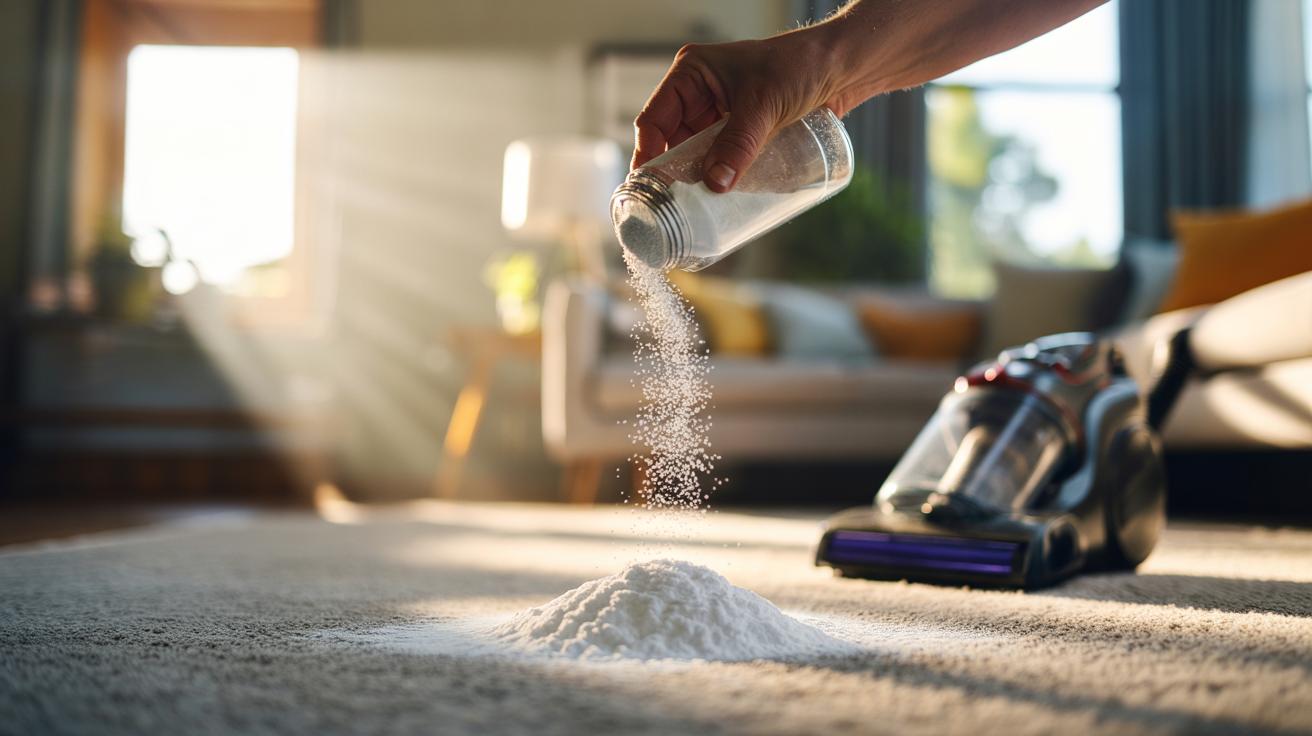
Start dry. If the smell follows a spill, blot thoroughly first—press, don’t rub—until the area feels only slightly damp. For routine refreshes, vacuum to lift grit so baking soda can settle onto the fibres. Sprinkle from waist height for an even veil: roughly 30–50 g per square metre for light odours, up to 100 g for stubborn patches. Work it in gently with a soft brush on cut-pile carpets; avoid aggressive scrubbing on delicate weaves or wool.
Let it sit. For everyday smells, 30–60 minutes does the trick. For pet odours or smoke, leave it for 3–12 hours, even overnight if you can ventilate. More time equals more adsorption and better neutralisation. Vacuum slowly, in overlapping passes, with a clean bag or canister so suction stays strong. Use crevice tools along skirting and under furniture where smells concentrate. If the area still whiffs, repeat once more rather than dumping on a heavy layer; multiple light cycles remove more residue and prevent caking. Optional: finish with a HEPA pass to capture fine dust.
Science and Safety: Fibre Types, Drying, and Pets
Most synthetic carpets—nylon, polyester, polypropylene—pair happily with sodium bicarbonate. Wool, being naturally acidic, also tolerates it, but avoid soaking or mixing with liquids on the pile, which can cause clumping and uneven pH shifts. Always patch-test in an inconspicuous corner before whole-room treatments. Keep the powder dry while it works; combining with vinegar on the carpet creates fizzing carbon dioxide that may drive residues deeper into the backing. If you want a vinegar rinse, use it in a separate, controlled cleaning step, then allow full drying before deodorising.
Households with pets should favour longer dwell times and a second vacuum pass. Urine crystals react to humidity; dehumidify or open windows to keep moisture low during treatment. Avoid scented additives that only mask smells and can irritate sensitive noses. Baking soda itself is non-toxic in small amounts, but keep pets from tracking it onto damp paws. For upright vacuums, check manufacturer guidance: very fine powders can accumulate in filters; clean or replace them after intensive deodorising sessions. The safest rule is simple: light layers, dry contact, thorough removal.
Quick Reference: Dwell Times and Dosage
Use this simple guide to match dwell time and dosage to the odour type. Precision here saves time and avoids overuse.
| Odour Type | Suggested Dosage | Dwell Time | Add-Ons | Notes |
|---|---|---|---|---|
| Light, stale room smell | 30–50 g/m² | 30–60 mins | None | Vacuum slowly, two passes |
| Pet odours (dry) | 60–100 g/m² | 3–8 hours | Dehumidify | Repeat cycle if needed |
| Smoke or cooking smells | 80–120 g/m² | 6–12 hours | Ventilation | Close doors to focus treatment |
| Musty damp patches | Light dusting | 2–4 hours | Fix moisture source | Baking soda is not a mould killer |
Tip: For large rooms, treat in zones to keep track of dwell times and ensure even vacuuming. If you crave a hint of scent, place essential oils on a cotton pad in the room, not in the powder; this avoids residue on fibres while still boosting perceived freshness.
Still smelling something stubborn? Think source control. Identify underlay issues, water ingress, or repeated pet accidents that have reached the backing. Baking soda excels at surface odours, but deep contamination may need extraction. If smells persist after two or three cycles, consider an enzymatic cleaner targeted at urine or proteins, followed by a fresh baking soda pass once fully dry. For smoke-saturated homes, a professional hot water extraction, then a final bicarbonate refresh, often resets the baseline. Keep rooms ventilated, maintain low humidity, and vacuum regularly to stop smells from settling in. What’s the first carpeted area you’ll treat today, and how will you measure the difference in freshness tomorrow?
Did you like it?4.6/5 (28)