In a nutshell
- 🫖 Tea bags absorb overnight moisture through a porous structure and capillary action, trimming condensation and starving bathroom mould of the surface damp it needs.
- 🔧 Step-by-step: start with bone-dry bags, place 3–6 on cold ledges and corners, avoid splash zones, then re‑dry each morning; helpful as localised “mini dehumidifiers,” but not a substitute for an extractor fan.
- 📍 Best use and limits: excel in micro‑climates like window sills and mirror edges; small capacity, discard if musty or wet, and prioritise repairing leaks and improving ventilation and heat.
- ⚖️ Comparison: pair tea bags with low‑cost allies—rock salt, bicarbonate of soda, silica gel—and, for whole-room control, a plug‑in dehumidifier; choose by capacity, cost, and location.
- ♻️ Routine matters: nightly placement plus brief fan use, a cracked window, and quick wipe-downs creates a layered defence that keeps bathroom mould from regaining momentum.
Bathrooms invite damp. Steam lingers, tiles cool quickly, and shadows behind the toilet rarely see a gust of fresh air. That’s fertile ground for bathroom mould, the grey‑green bloom that creeps along grout and silicone. Here’s a simple, penny‑priced defence that works while you sleep: tea bags. Place a few dry bags in strategic spots at night and wake to noticeably less misting and a fresher, less clammy feel. It’s not magic, just physics and plant fibres doing quiet work. Think of them as modest, biodegradable dehumidifiers that mop up micro‑moisture at the source.
How Tea Bags Absorb Moisture Overnight
Tea leaves and the permeable paper that holds them combine two useful properties: porous structure and capillary action. Water vapour condenses into fine droplets on cool surfaces; the fibres in a tea bag wick those droplets in, spreading moisture across a large internal surface. That wider spread accelerates evaporation when conditions change, but crucially, during the night lull, it reduces free moisture available to feed mould. Polyphenol‑rich leaves are mildly hygroscopic; they attract and temporarily hold water, a bit like a sponge made of tiny tunnels. It won’t empty a wet room. It will trim the peaks where mould thrives.
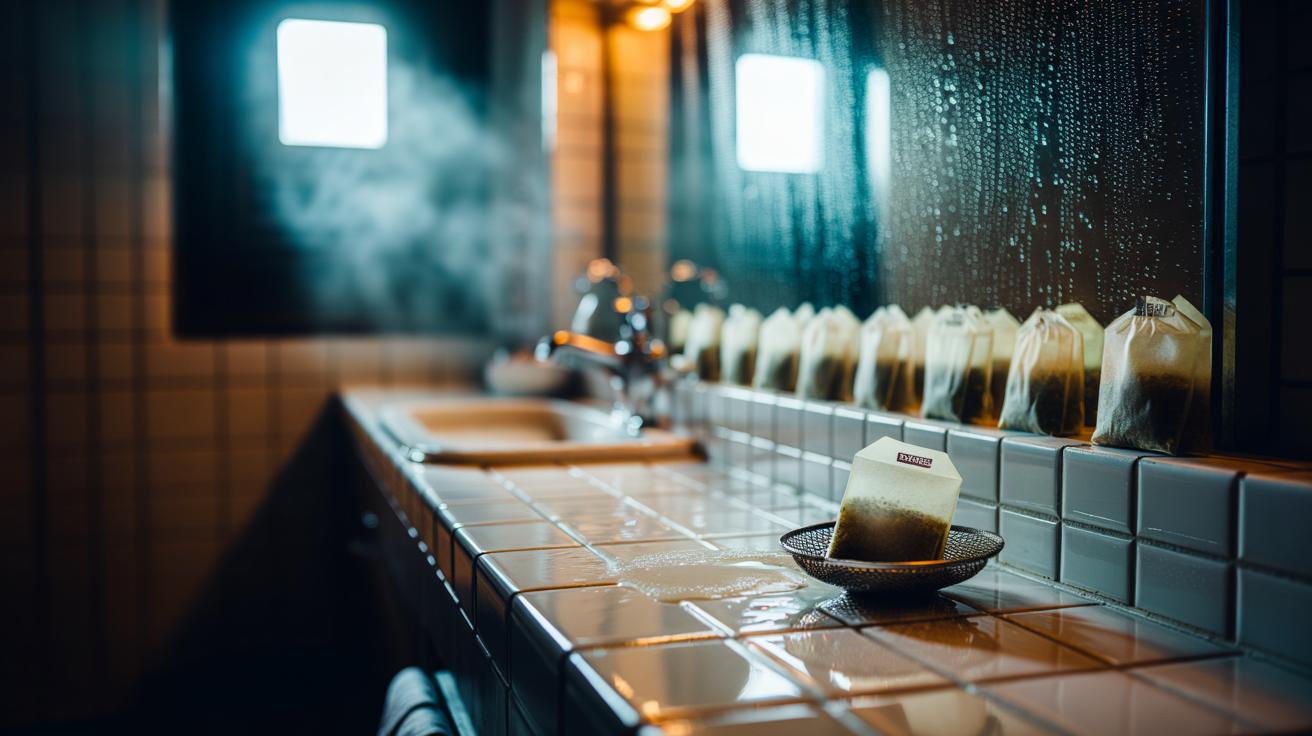
Because tea is light and the bag is breathable, it works best right where condensation forms first: window sills, mirror ledges, shelf corners, the rim behind a cistern. Warmer air rises, cools on tiles or glass, then sheds vapour. Parking a few dry tea bags in those micro‑zones creates localised buffers that tame droplets before they trickle into grout lines. Expect subtle, measurable help—not a replacement for a decent extractor fan. The charm is its simplicity: no power, no plastic, and no chemical scent to mask the must.
Step-by-Step: Setting Up the Tea-Bag Dehumidifier
Start with bone‑dry bags. Unused black tea works well; so do thoroughly dried, previously brewed bags if you’ve air‑dried them until crisp. Place 3–6 bags around the bathroom, concentrating on the chilliest surfaces and tight corners. A shallow, breathable holder—egg cup, ramekin with holes, mesh soap dish—keeps airflow steady. Avoid direct splash zones. Dry is non‑negotiable: damp bags attract mould rather than deter it. At bedtime, pop them out; in the morning, move them to a sunny sill or a warm, ventilated spot to re‑dry. Rotate nightly.
Scale the setup to conditions. Small cloakroom? Two bags by the window does the trick. Family shower room with nightly steam? Try a ring of six: two on the sill, one behind the toilet, one by the bath corner, and two near the vanity. Replace bags weekly if they soften or darken permanently. Keep them away from candles and little hands. Pair the habit with five minutes of post‑shower ventilation, door ajar, fan on. Tea bags nibble at residual damp; the fan handles the bulk. Compost used leaves, or drop spent bags in food waste—low waste, low cost.
Where It Works Best and Key Limitations
Tea bags excel in micro‑climates that standard dehumidifiers ignore: the cold tile strip under a window, the inner lip of a shower niche, or the ledge where condensation beads. In rental flats with modest extractors, they’re a quiet ally. You’ll also notice fewer streaks on mirrors and slightly faster clearing of mist on frosty mornings. They’re particularly handy overnight when doors are closed and fans are off. A quick wipe at dawn, a run of the fan, and you’ve starved mould of its breakfast—surface moisture.
There are limits. Tea bags have small capacity. If your bathroom hits rainforest levels after long, hot showers, they’ll saturate quickly. Persistent damp from leaks, failed grout, or a cold bridge in an exterior wall demands repair, not teabags. Over‑wet bags can themselves grow mould; discard at the first whiff or sliminess. Scented teas won’t disinfect; they simply smell pleasant. For allergy‑sensitive households, choose plain black or green tea. Consider this rule of thumb: tea bags for the edges, extractor for the air, heat for the walls. Combine the trio and mould loses momentum.
Tea Bags vs Other Low-Cost Moisture Fixes
Curious how this hack stacks up? In the real world, you mix tactics. Tea bags are nimble and cheap; other household stand‑ins offer more capacity or longer service. Here’s a quick comparison to help you target the right fix for the right nook. Prices reflect typical UK shop or online costs and will vary by brand and region. The aim is clarity, not lab‑grade precision. Use the table as a guide, then tune by trial—your room, your routine, your humidity.
| Method | Approx. Capacity | Typical UK Cost | Best For | Notes |
|---|---|---|---|---|
| Tea bags | Low (localised) | £0.02–£0.05 per bag | Window sills, mirror ledges | Biodegradable, needs re‑drying daily |
| Rock salt | Medium | ~£1 per kg | Corners, cupboards | Can drip brine; use tray |
| Bicarbonate of soda | Low–Medium | £0.60–£1 per 500g | Enclosed shelves | Odour control bonus |
| Silica gel sachets | Medium–High | £5–£10 multi‑pack | Cabinets, medicine chests | Recharge in low oven |
| Plug‑in dehumidifier | High | £40–£150 | Whole room | Best overall; uses electricity |
Use tea bags nightly to tame edges, salt or silica for cupboards, and a fan or dehumidifier for the main air volume. That layered approach is effective and frugal. No single fix wins everywhere.
Small, consistent habits beat occasional blitzes. Dry the shower screen, crack the window, run the fan, and seed those strategic perches with dry tea bags. You’ll notice less beading, fewer black specks, and a bathroom that feels lighter in the morning. It’s the quiet, cumulative work that keeps mould at bay. Will you try the tea‑bag trick tonight—and if you do, where will you place the first three to make the biggest difference in your bathroom?
Did you like it?4.7/5 (30)