In a nutshell
- ✨ Use a banana peel as a gentle, eco-friendly buff for silver; its fibres and natural oils lift grime and soften light tarnish, but it’s not a miracle restorer.
- 🧪 Tarnish is silver sulfide; the peel doesn’t reverse it chemically, it provides mild abrasion—safe for sterling silver, but always spot-test plated pieces and avoid soft or porous stones.
- 🛠️ How-to: pick a ripe peel, rub the inner side in small circles, reach crevices with a cotton bud, then rinse and dry thoroughly before a final microfibre buff.
- ⚠️ Limits and care: not ideal for heavy black tarnish; use anti-tarnish storage (pouches, silica gel) after cleaning, and consider professional advice for valuable or historic items.
- 🔄 Alternatives: match the method to the problem—aluminium + bicarbonate bath for moderate/heavy tarnish, commercial silver polish for mirror finishes; start mild, escalate only if needed for an eco-friendly routine.
Britons love a clever household hack, especially one that lifts the lustre of old treasures without harsh chemicals or faff. Enter the banana peel. Yes, the humble skin you usually bin can help coax a quick gleam from dulled silverware and jewellery. It’s not magic, and it’s not a cure-all, but it’s surprisingly effective for light tarnish and everyday grime. The peel’s gentle texture and natural compounds act like a mild polish, lifting residue while you buff. Used sensibly, it’s a budget-friendly, eco-conscious way to refresh pieces between deeper cleans. Here’s what works, what doesn’t, and how to do it right.
Why Banana Peel Works on Silver
Silver loses its sparkle as it develops a film of silver sulfide from exposure to air and sulphur compounds. Banana peel doesn’t chemically reverse this tarnish the way an aluminium-foil bath can. Instead, it behaves like a super-gentle polish. The inner side of the peel contains fine fibres, natural oils, and trace organic acids. Together they create light, lubricated abrasion that can lift surface grime and soften the appearance of early tarnish. Think of it as buffing rather than stripping. Do not expect a banana peel to restore heavily blackened heirlooms to showroom shine; it’s better for maintenance or a quick pre-dinner spruce-up.
There’s persistent chat about potassium in bananas being the “active” ingredient; in reality, the cleaning effect comes from the peel’s texture and mild compounds rather than some reactive metal magic. The upside? It’s notably gentle on sterling silver and less likely to scratch than homemade pastes with gritty particles. The downside is speed and depth. Moderate tarnish needs something stronger. Always test on a hidden spot, especially if your item is silver-plated or carries soft stones. A cautious trial prevents disappointment—and costly mistakes.
Step-by-Step: From Fruit Bowl to Gleam
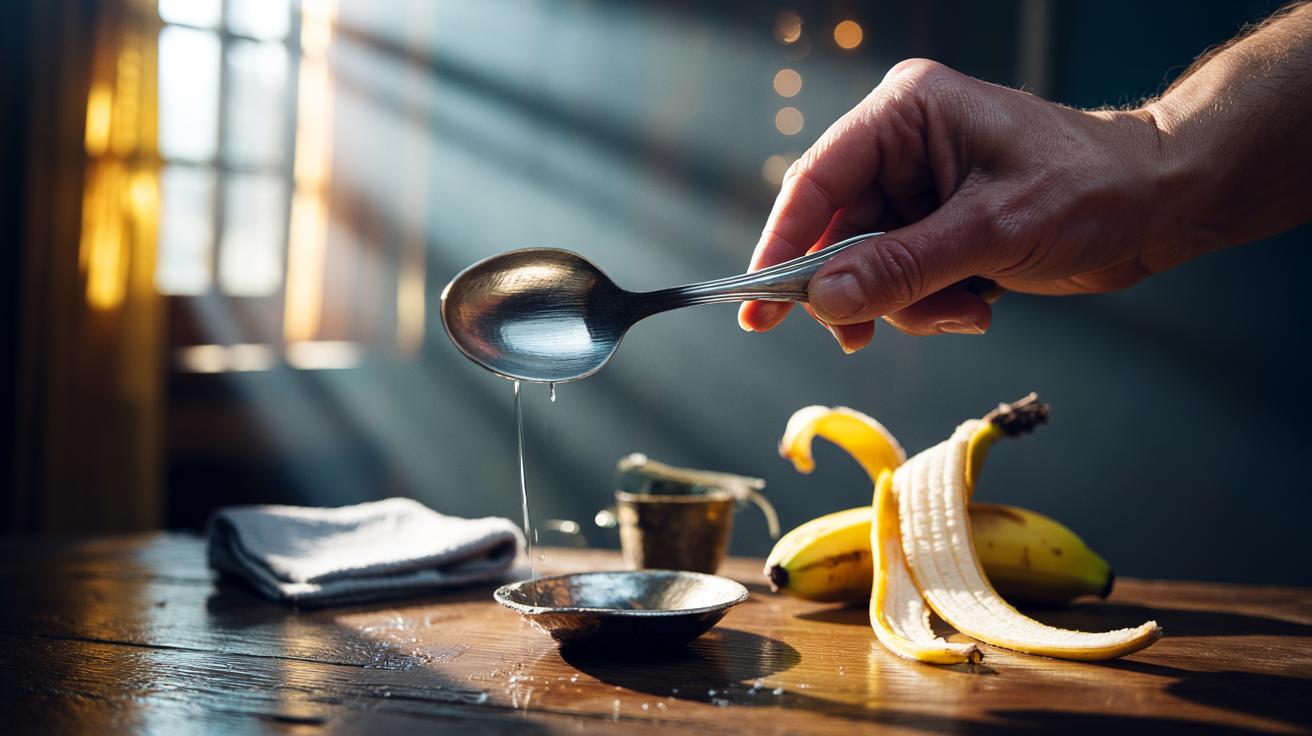
Start with a ripe banana—yellow with minimal brown spots works well. Peel it and reserve the fruit for a snack. Take a piece of the inner peel and fold it to create a comfortable pad. If the peel feels dry, dab it with a drop of water to form a light, slick film. Work on a clean, lint-free surface with good light. Now, gently rub the silver with small, overlapping circles. Apply only light pressure; the motion does the work. Refresh your peel pad as it darkens with residue, and keep moving to a clean area.
For tight crevices, wrap a sliver of peel around a cotton bud to reach into patterns or chain links. After two to five minutes, rinse the piece under lukewarm water to wash away leftover fibres and oils. Pat dry immediately with a microfibre cloth to prevent water spots, then buff to finish. If you like, a final pass with a clean, dry cloth boosts the sheen. Rinse thoroughly and dry fully—residual peel can attract dust and dull the result. Expect a refreshed glow in under ten minutes for a small item; trays or candelabra take longer and more patience.
What to Expect: Results, Limits, and Pitfalls
On lightly tarnished spoons, chains, and bangles, the banana peel method often delivers a soft, pleasing shine and removes that cloudy film that steals sparkle. It won’t erase deep, stubborn black tarnish lines, nor will it brighten crevices that have turned charcoal over years. In those scenarios, try an aluminium–bicarbonate bath or a reputable silver polish. Banana peel is a maintenance polish, not a restoration tool. Used regularly, it can slow the descent into dinginess and keep a favourite piece camera-ready without chemical smells.
Watch out for silver-plated items with thinning plating; any abrasive action, even gentle, risks revealing the base metal beneath. Avoid pearls, opals, turquoise, and other porous stones set in silver—peel residue can lodge or dull them. Clean settings with a light touch, and use a soft brush to remove fibres. After polishing, store pieces in anti-tarnish pouches or zip-top bags with silica gel to delay re-tarnishing. Finally, manage expectations: you’ll see a lift in lustre and a clearer surface, not a high-gloss mirror unless the piece was close to it already. If the item is valuable or historical, consult a professional conservator.
Banana Peel vs Other Methods: A Quick Comparison
Choosing the right method depends on the problem you’re trying to solve. Banana peel excels as an eco-friendly, low-risk polish for light tarnish. If you’re facing brown or black accretions, speed and chemistry matter more than gentleness. That’s where an aluminium–baking soda bath or a commercial cream comes into play. Match the method to the metal’s condition and your tolerance for risk. The table below offers a snapshot to help you decide fast.
| Method | Best For | Tarnish Level | Risk to Plating | Eco Score | Time |
|---|---|---|---|---|---|
| Banana peel buff | Quick refresh, light grime | Light | Low (gentle abrasion) | High | 5–15 min |
| Aluminium + bicarbonate bath | Reversing silver sulfide | Moderate–heavy | Medium (follow ratios) | High | 10–20 min |
| Commercial silver polish | Mirror finish, spot control | Light–heavy | Medium–High (if overused) | Medium | 10–30 min |
Many households rotate methods: a banana peel for a midweek spruce, a chemical-free bath for seasonal resets, and a paste for stubborn corners or exhibition gloss. That blended approach balances safety and impact. If in doubt, start with the mildest option and step up only as needed. The small savings in shine today are worth it if you avoid long-term wear on beloved pieces tomorrow.
As natural hacks go, polishing silver with banana peel is disarmingly simple, notably gentle, and—on the right items—surprisingly effective. It’s a sound first step before stronger treatments, especially if you value low waste and low odour. Treat it as you would a good microfibre: perfect for maintenance, not miracles. Test discreetly, rinse well, dry thoroughly, and store smartly. Your silver will thank you with a quieter, cleaner gleam. Will you give the banana peel buff a try this week—or do you already swear by another eco-friendly trick that deserves the spotlight?
Did you like it?4.6/5 (22)