In a nutshell
- ✨ Quick shine in minutes: Use white vinegar and a microfibre mop to dissolve grime and leave a streak-free, residue-free finish in about five minutes.
- ⏱️ Method that works: Sweep fast, mix 1:16–1:25 vinegar:water, mop in tight S-patterns, keep the head damp not wet, and buff scuffs dry for instant brightness.
- 🧪 Smart ratios and surfaces: Ideal for sealed tile and vinyl; use lighter dilutions on sealed wood/laminate; avoid natural stone and waxed finishes to prevent etching or dulling.
- ⚠️ Safety first: Never mix vinegar with bleach or ammonia, spot-test finishes, keep traffic off until dry, and consider distilled water to reduce hard-water haze.
- 🧰 Troubleshooting tips: If streaks persist, do a hot-water pre-pass, refresh worn microfibre heads, treat grease with a stronger pre-spot, and remember—the goal is clarity, not coating.
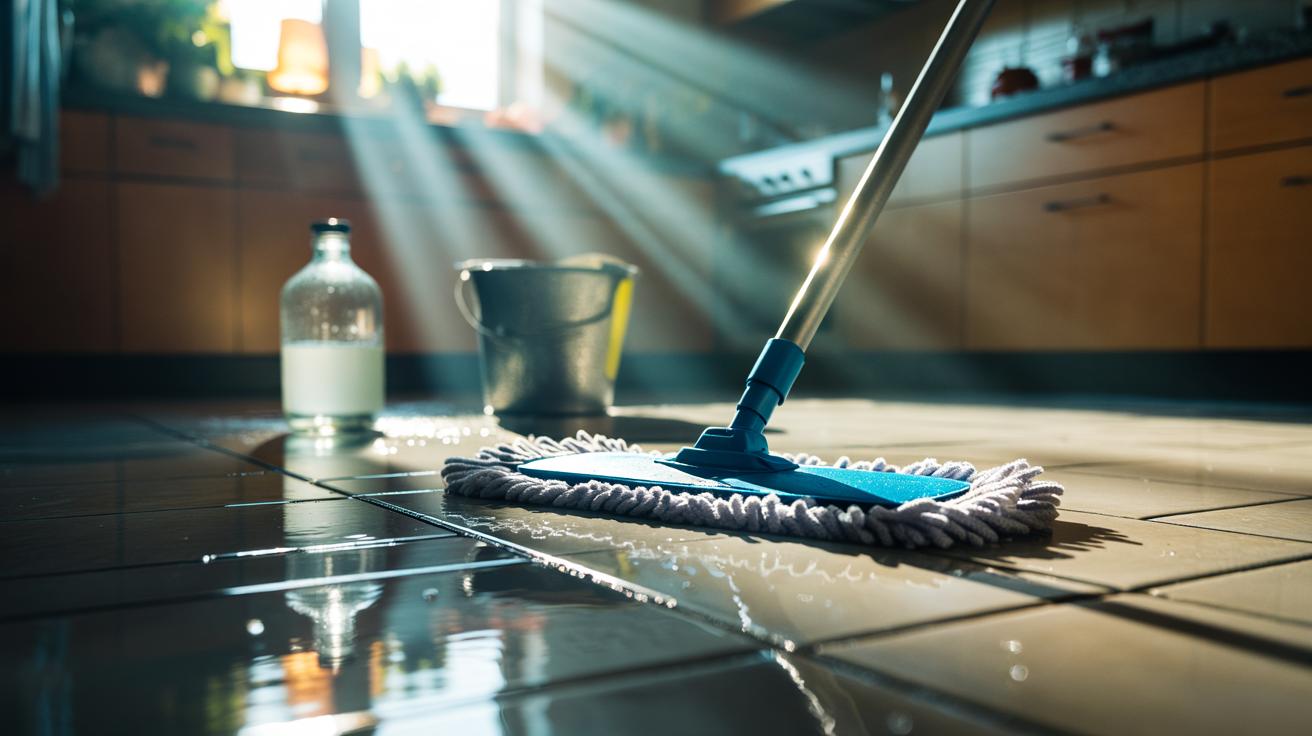
Five minutes. That’s all it takes to turn a tired, dull floor into something that catches the light and lifts the mood of a room. The not-so-secret weapon is a bottle of plain white vinegar and a reliable microfibre mop. Vinegar’s gentle acidity dissolves grime, banishes sticky residue, and leaves a crisp, streak-free finish. No harsh fumes. No lingering film. Just clean that looks deliberate. It’s the quickest reset you can give a home between busy moments. Whether you’re tackling kitchen tiles after supper or reviving a high-traffic hallway before guests arrive, this thrifty method delivers shine with minimal effort—and almost no waiting time.
Why Vinegar Wins for Everyday Shine
Vinegar excels because it targets the exact culprits that make floors look flat: alkaline dust, soap residue, light mineral deposits, and tracked-in grease. Its main active, acetic acid (around 5%), is mild enough to use on many sealed surfaces yet strong enough to cut through the micro-films that dull a finish. Used correctly, it leaves a residue-free surface, so the shine you see is the surface itself—not a synthetic gloss. Cost matters too. A splash of vinegar in warm water creates a low-cost, low-waste solution that’s perfect for daily or mid-week spruce-ups. In five minutes, you move from mess to momentum—no bucketfuls of suds, no heavy scrubbing. Because it’s clear and non-foaming, you can see where you’ve mopped and what you’ve missed on the first pass. Pair it with a tightly woven microfibre head, and you maximise mechanical lift: fibres grab dirt while vinegar loosens bonds. The result feels fresher underfoot, and looks brighter even in side light.
The Five-Minute Mop Method
Speed is the point. Start by clearing crumbs with a quick sweep or a vacuum pass—sixty seconds tops. Mix your solution: 1 litre of warm water with 60–120 ml of white distilled vinegar (roughly 1:16 to 1:8) depending on soil. Light mess? Go lower. Greasy kitchen corners? Go higher. Avoid adding soap; it’s the film-maker you’re trying to erase. Dip a well-wrung microfibre mop and work in tight S-patterns, overlapping slightly to prevent missed strips. Focus on high-traffic lanes first; edges later if time allows. Keep the mop damp, not wet, and re-wring often so you’re lifting, not redistributing. For stubborn spots, pause, lay the mop for five seconds, then swipe—contact time counts. Finish with a fast dry buff using a clean, dry cloth on scuffed areas. Windows open. Job done. Time yourself once; you’ll never go back to slow mopping. The floor feels smooth, resists footprints, and dries in minutes without the tell-tale streaks of scented cleaners.
Ratios, Surfaces, and Safety
Not every floor is the same. Sealed ceramic, porcelain, and most vinyls love vinegar’s mild acidity. Some surfaces do not. The key is dilution and a light touch. Use warmer water for faster evaporation, but never soak seams, especially on wood-derivative floors. When in doubt, spot-test in a hidden corner and check after it dries. Keep pets and children off until the floor is dry; it’s safe then and the temporary odour fades quickly. Never mix vinegar with bleach or ammonia—dangerous gases can form. If the smell bothers you, swap tap for distilled water to reduce mineral note and avoid hard-water spotting. The guide below helps you map dilutions to materials.
| Floor Type | Dilution (Vinegar:Water) | Notes |
|---|---|---|
| Sealed ceramic/porcelain tile | 1:16 | Excellent for grease and grout film; avoid flooding. |
| Vinyl/LVT | 1:20 | Safe for sealed wear layers; damp-mop only. |
| Sealed hardwood/laminate | 1:25 | Light passes, tightly wrung; never leave standing moisture. |
| Sealed cork | 1:25 | Gentle, quick dry; monitor seams. |
| Natural stone (marble, travertine, granite) | Do not use | Acid can etch stone; use pH-neutral cleaner. |
| Waxed wood or acrylic-polished floors | Avoid | May dull or strip; follow finish-maker guidance. |
| Rubber floors | 1:32 | Test first; some blends may haze. |
Troubleshooting Dull Spots and Streaks
If streaks persist, you’re either using too much solution or too much product is already on the floor from past cleaners. Try a two-pass approach: first a hot-water-only mop to lift old surfactants, then the vinegar mix to neutralise residual film. Cloudiness after drying often points to hard water; switch to distilled water and wring more aggressively. Never flood wood floors; damp, not wet, is the golden rule. For greasy kitchens, pre-treat splatters with a cloth dipped in stronger dilution (1:8), then mop at your usual ratio. Microfibre matters: if the head is old or over-softened by fabric conditioner, it will smear—wash it hot, no softener, and air-dry. Scuff marks? A light buff with a dry towel or a melamine sponge corner, then a quick vinegar pass to remove residue. If acrylic polish or wax is to blame, vinegar won’t strip it; use the finish’s recommended remover and reset the surface. The goal is clarity, not coating.
In a world of complicated cleaning kits, vinegar offers a swift, clear-headed route to gleaming floors that feel great underfoot and look professionally tended. It’s budget-friendly, kinder to indoor air, and forgiving when time is tight. The five-minute mop won’t fix deep scratches or long-neglected build-up, but it will make everyday living spaces pop with very little fuss. Shine, speed, simplicity—choose two? With vinegar, you get all three. Ready to time your first five-minute floor refresh and see how much brighter your home can look before the kettle boils?
Did you like it?4.6/5 (27)