In a nutshell
- 🫖 Tea leaves’ tannins and polyphenols bind odour molecules, reducing volatility; the method neutralises rather than masks smells, with dry leaves being essential for speed and safety.
- 🧭 Method: fully dry used tea bags (24h), sprinkle lightly, let dwell 20–60 minutes (overnight for mustiness), optionally mix with baking soda, then vacuum slowly and empty the canister; always patch-test.
- 🍃 Tea choice: pick green/white for light carpets, use black for stronger odours (higher stain risk), and opt for gentle herbal infusions; avoid flavoured blends with oils and keep pets away until cleanup.
- 🧹 Benefits: quick, eco-friendly, non-abrasive refresh between deep cleans; dryness helps wick humidity and preserve fibres, delivering immediate lift in traffic areas and stale rooms.
- 🔎 Troubleshooting: if smells persist after two rounds, the source may be in the padding or trapped moisture—use this as a diagnostic cue to seek deeper or professional cleaning.
There’s a quietly brilliant trick doing the rounds in UK homes: deodorising carpets with a simple sprinkle of tea. It sounds quaint, almost old-fashioned, yet the chemistry is sound and the results are surprisingly swift. Tea leaves are rich in tannins and polyphenols that grab onto odor molecules, while the dry plant fibres act like a tiny sponge. The process is fast, cheap, and gentle on fibres. The one golden rule is to use completely dry leaves. Done right, this method tackles pet whiffs, musty hallways, and post-party pongs without harsh perfumes or propellants, leaving behind a fresher, more balanced scent profile that feels clean rather than masked.
How Tea Neutralises Carpet Odors
Household odors are often volatile organic compounds that cling to fibres or linger in the air just above them. Tea leaves contain polyphenols and tannins that interact with these molecules, reducing their volatility and trapping them in the leaf’s porous structure. Because the leaves are dry and feather-light, they settle across the carpet pile, creating broad contact with the smelly zones. This wide surface contact is why a simple sprinkle works so quickly. You’re not perfuming the smell; you’re absorbing and rebalancing it at the source.
There’s more at play. Tea is mildly acidic, so it can alter the micro-environment that allows bacterial by-products to bloom. Some teas, such as peppermint or chamomile, contribute gentle aromatic compounds that nudge the nose towards “fresh” without the cloying heaviness of synthetic sprays. The leaves also help wick residual humidity from the top fibres, which is useful after a rainy school run or a steamy cooking session. Think of tea as a natural, biodegradable odor magnet—one that complements, rather than fights, your carpet’s texture.
Results are often immediate with recent spills or light pet trails, and they improve over a few hours in stale rooms. Crucially, the method is non-abrasive. There’s no gritty residue grinding into fibres, and there’s no sticky film that can attract more dust later. For everyday freshness, it’s a low-risk, high-reward tactic.
Step-by-Step: Sprinkling Tea for Fresh Carpets
Start with used tea bags or loose leaves that have been fully dried on a tray for 24 hours. This preserves the deodorising polyphenols but removes staining risk from moisture. Never sprinkle wet or even damp leaves onto carpet. If you prefer, use plain, unopened tea, but avoid flavoured blends with added oils that may leave residues.
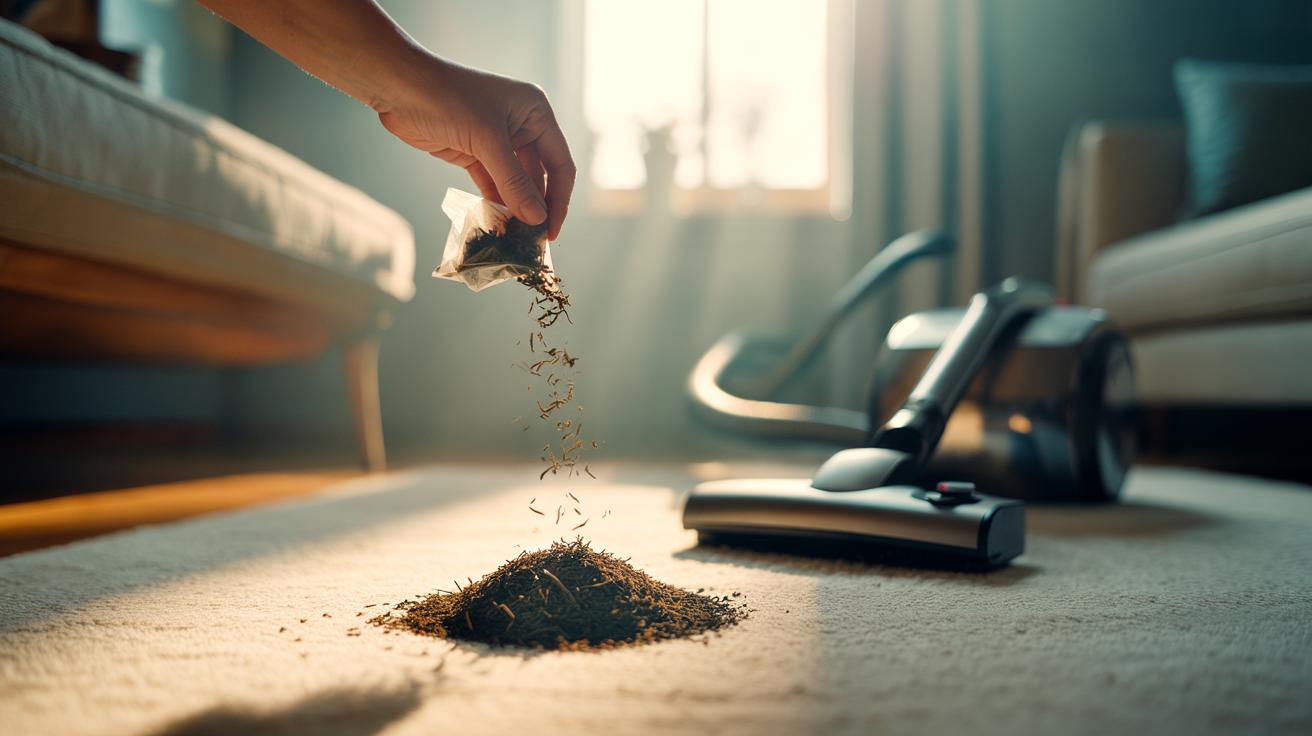
Crack open the bags and distribute a light, even sprinkle across the target area. A little goes a long way—think seasoning, not compost. For heavy zones, work in sections. Gently brush the pile with your hand or a soft clothes brush so the leaves nestle between fibres. Allow 20–60 minutes for everyday refreshes; overnight for musty spare rooms. If you want a boosted lift, you can mix one part tea with two parts baking soda to widen the adsorption profile, especially against acidic kitchen smells.
Vacuum slowly with overlapping passes. Use the machine’s highest airflow setting rather than the deepest brush setting to avoid driving fragments down. Empty the canister promptly so captured odors don’t waft back into the room. Always patch-test on an inconspicuous corner first, especially with wool or pale synthetics. If any powder remains, a second pass or a quick lint-roll tidies the last specks.
Choosing the Right Tea and Avoiding Stains
Selecting the right tea is about balancing aroma, stain risk, and sensitivity. As a rule, opt for unflavoured green or white tea on light carpets. Black tea offers stronger tannins but slightly higher staining potential if not fully dry. Herbal infusions are caffeine-free, which is helpful in homes with pets that might mouth stray leaves. When in doubt, lighter teas are safer for pale piles. Below is a quick guide to help you decide.
| Tea Type | Best For | Stain Risk | Notes |
|---|---|---|---|
| Green/White | General odors, light carpets | Low | Mild scent, good everyday choice |
| Black | Strong pet or curry smells | Medium | Ensure leaves are bone-dry |
| Peppermint/Herbal | Musty rooms, stale air | Low | Caffeine-free; gentle freshness |
| Rooibos/Hibiscus | Deep, earthy whiffs | Higher | Red pigments; avoid pale carpets |
A few precautions: keep pets and toddlers away until vacuuming, particularly with caffeinated teas. Use plain blends rather than dessert-style teas with oils or sprinkles. If you’re scent-sensitive, start with green tea; it neutralises without a lingering perfume. Dryness is non-negotiable for safety and cleanliness. Finally, if the carpet still smells after two rounds, the source may be embedded moisture or padding damage—time to consider a deeper clean or professional assessment.
Used smartly, tea is a nimble ally for fresher floors: fast to apply, easy to vacuum, and gentle on the planet. It suits busy households between deeper cleans, revives guest rooms before visits, and rescues hallways after wet walks. The secret is simple: dry leaves, light sprinkle, patient dwell, thorough vacuum. If that routine doesn’t solve persistent odors, take it as a diagnostic nudge to look beneath the pile. Ready to try a small patch today—and which tea will you reach for first?
Did you like it?4.5/5 (25)