In a nutshell
- 🌿 Acetic acid acts as a fast, foliar contact herbicide that desiccates soft tissues; it’s non-systemic, so roots of tougher weeds survive.
- ⚙️ Match strength to the job: 5% for young annuals, 10–20% for waxier leaves; apply on dry, sunny days, use a drop of surfactant, and favour repeat light treatments.
- 🛡️ Prioritise safety: wear PPE, prevent drift with shields, never mix with bleach, store clearly labelled, and note potential short-term soil pH impacts from heavy use.
- 🌱 Know the limits: perennials often re-sprout; treat vinegar as a tactical spot solution and back it with hoeing, mulch, and tight planting to suppress regrowth.
- 🧭 Build an integrated plan: target paths and cracks precisely, avoid salt, protect desirable plants, and combine timing, coverage, and cultural controls for lasting weed reduction.
Gardeners crave quick wins against sprawling weeds, especially when they muscle into borders and gravel paths. That’s where humble kitchen vinegar steps in. Its active ingredient, acetic acid, scorches soft plant tissue fast, leaving leaves limp and browned within hours on a warm day. It’s cheap, accessible, and simple to apply with a handheld sprayer. Yet it’s not magic. Vinegar is a blunt, non-selective tool that demands precision and care. Used wisely, it can tidy annual weeds without leaving residues. Used carelessly, it can singe prized plants and irritate skin and eyes. Here’s how its acidity targets unwanted growth swiftly, and how to use it responsibly.
Why Vinegar Damages Weeds So Quickly
The weed-scorching power of vinegar comes from acetic acid, a weak organic acid that acts as a potent contact herbicide. When sprayed onto foliage, it disrupts cell membranes, dissolves the waxy cuticle, and draws moisture out of the leaf. Cells collapse. Leaves wilt. In bright sun and dry air, desiccation accelerates, producing visible damage the same afternoon. Results can be startlingly swift on tender seedlings and young annuals. Because the action is strictly on the surface tissue you spray, anything green that gets hit is at risk—ornamentals, vegetables, even your lawn.
It is not systemic. That matters. A systemic herbicide moves through the plant to the roots; acetic acid does not. Perennial weeds with tough crowns or deep taproots often re-sprout a week later because their underground stores remain intact. The upshot: vinegar shines as a tidy-up for driveways, patios, and fresh seedlings in vegetable beds before they gain strength. For creeping bindweed or dock, expect repeat treatments, close timing, and perhaps a different tactic entirely.
Getting the Strength and Timing Right
Most kitchen vinegar is around 5% acetic acid; it singes small annuals well when applied on a warm, dry day. Horticultural vinegar ranges from 10% to 20%. It hits harder but raises safety stakes—eye and skin protection becomes non-negotiable. Higher strength does not equal better for every job. On loose, sandy paths with sprouting seedlings, 5% is usually enough. On tough, waxy leaves, a stronger product may be justified, but only with care, shields, and precise targeting to reduce drift.
| Acetic Acid | Best Use | Targets | Precautions |
|---|---|---|---|
| 5% | Routine spot-spraying | Young annual weeds | Avoid drift; protect nearby plants |
| 10–20% | Stubborn foliage, paved areas | Waxy leaves, mature annuals | Wear goggles/gloves; test small patch first |
Timing is everything. Aim for dry weather, ideally midday sun, leaves fully dry, and no rain forecast for 24 hours. Spray to just wet the leaf—enough to glisten, not run. A drop of washing-up liquid per litre acts as a mild surfactant, helping coverage. Reassess 48 hours later. Repeat light treatment beats one drenching. Remember, vinegar does not stop seeds germinating; it only burns what you can see. A well-timed pass at the “white-thread” stage saves hours of hand weeding later.
Applying Safely and Responsibly in the Garden
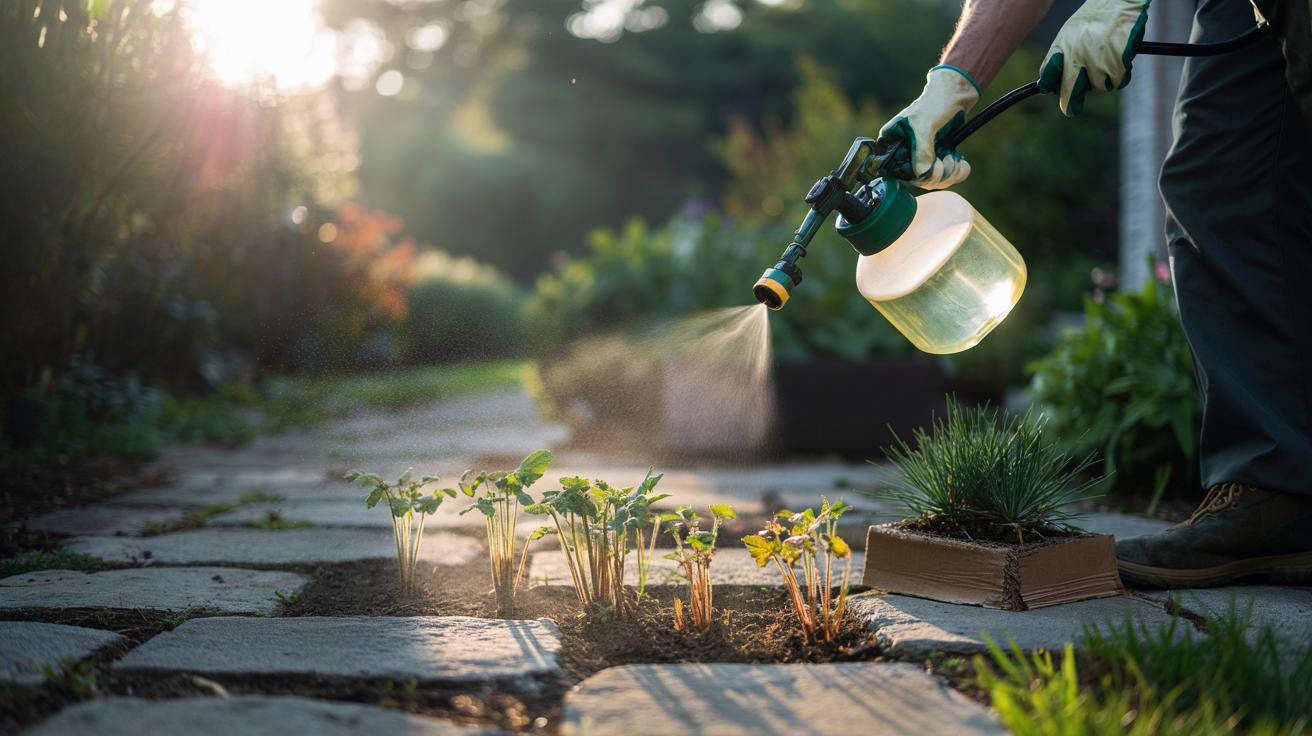
Think of vinegar as a sharp tool. Respect it. Wear gloves and eye protection, especially with products above 5%. Keep children and pets away until leaves are dry. Use a narrow-nozzle sprayer or a foam brush on breezy days to reduce drift. A bit of cardboard as a spray shield works wonders around delicate perennials. Keep spray off desirable foliage and fresh bark, and leave a buffer near vegetable crops. On gravel drives, work in strips, checking for puddling that might flow into borders.
Storage matters: label your sprayer, and never mix vinegar with bleach or chlorine-based cleaners—dangerous fumes can form. Rinse equipment with water after use to protect seals and metal parts. While acetic acid biodegrades rapidly, repeated, heavy applications can temporarily lower surface pH and nudge soil microbes, so treat it as a spot solution rather than a blanket spray. Disposal? Avoid drains and watercourses. Pour leftovers into a labelled container for future use, or dilute heavily and apply only where weeds—not wildlife—will encounter it.
What Vinegar Can’t Do: Limits and Smart Alternatives
Vinegar doesn’t rewrite biology. Perennial weeds such as dandelion, dock, or ground elder store energy below ground. You can crisp the leaves, but the crown endures, ready to rebound. Multiple hits in quick succession will weaken them, yet digging, mulching, or targeted extraction tools often finish the job faster. Use vinegar as a tactical strike, not a long campaign. It also struggles with dense, hairy, or blue-green leaves coated in wax; coverage becomes patchy, and regrowth follows.
Build a programme. On paths, pair vinegar with deep mulch or weed-suppressing membranes to reduce sprouting. In beds, tighten your planting distances and use living mulches to shade soil. A quick pass with a hoe at the seedling stage can outperform any spray on a calm morning. For paved cracks, a careful wicking applicator beats broad spraying. Salt? Skip it. While salt boosts burn, it lingers and can damage soil structure, harm roots, and travel with rainwater. The goal is clean edges and healthy soil, not collateral damage.
Used with care, vinegar gives gardeners a fast, intuitive way to knock back seedlings and tidy hard surfaces without resorting to heavy-duty chemicals. It works best as part of a wider weed control plan that mixes timing, cover, and selective intervention. Choose the right strength, spray on dry, sunny days, and keep it off the plants you love. Then step back and reassess. What small change—mulch depth, planting density, a sharper hoe—would make tomorrow’s weeds fewer and weaker than today’s?
Did you like it?4.6/5 (20)