In a nutshell
- 🧄 Garlic repels aphids fast by releasing allicin and sulphur volatiles that mask plant cues and irritate pests, delivering an overnight reset rather than a pesticide kill.
- ⏱️ One-evening method: crush 4–5 cloves, steep in hot water, strain, dilute to 1 L, add a drop of mild soap, then spray at dusk targeting leaf undersides; refrigerate leftovers and use within 48 hours.
- 🌙 Safety first: patch-test delicate plants, avoid midday sun and heatwaves, keep off blooms to protect pollinators, and delay if rain is due to prevent wash-off.
- 🐞 Smarter gardening: interplant alliums, use nasturtiums as trap crops, encourage ladybirds, hoverflies, and lacewings, and disrupt ant “herders” to strengthen integrated control.
- 🌿 Practical follow-up: rinse honeydew, prune distorted tips, pair with sticky cards and ventilation in greenhouses, and rotate tools (soft soap/oils) if pressure persists.
The greenfly siege always seems to begin overnight. One evening your roses, broad beans, or chilli seedlings look pristine; by morning, they’re stippled, sticky, and fading fast. UK gardeners know the panic and the cost of shop sprays. Here’s the quiet fix: garlic, the pungent staple on your kitchen counter. Crushed, steeped, and misted, it can interrupt an aphid feeding frenzy before breakfast. Quick to mix. Cheap. Effective when you’re running out of light. Used correctly at dusk, garlic repels aphids while sparing pollinators. What follows isn’t folklore dressed as science; it’s accessible chemistry deployed with a journalist’s eye for practical detail.
Why Garlic Works Against Aphids
When you crush a clove, you rupture its cells and unleash allicin, a reactive sulphur compound that quickly breaks into a bouquet of thiosulfinates and polysulphides. To aphids, that odour cloud is chaos. They find host plants by sniffing out leaf volatiles and tasting sap; garlic’s sulphurous plume masks those cues and irritates their soft bodies. It’s not a conventional pesticide. It’s a sensory assault and an unpalatable surface. The result is swift: fewer aphids probing, less honeydew, and curtailed virus spread. On contact, the mix coats stems and leaves, making sap-sipping harder and movement riskier on tender growth.
Even in a cool British evening, these volatiles disperse enough to form a short-lived barrier without scorching foliage. One well-aimed garlic spray at dusk can knock back an aphid bloom by morning. It also nudges ants that farm aphids to retreat, breaking the mutualism that guards colonies. Don’t expect a total kill. Expect a retreat, a reset of pressure. That’s your window to prune distorted tips, wash off residues, and let natural predators—ladybirds, hoverflies, lacewings—resume control on your allotment or balcony planters.
A One-Evening Plan: From Clove to Spray
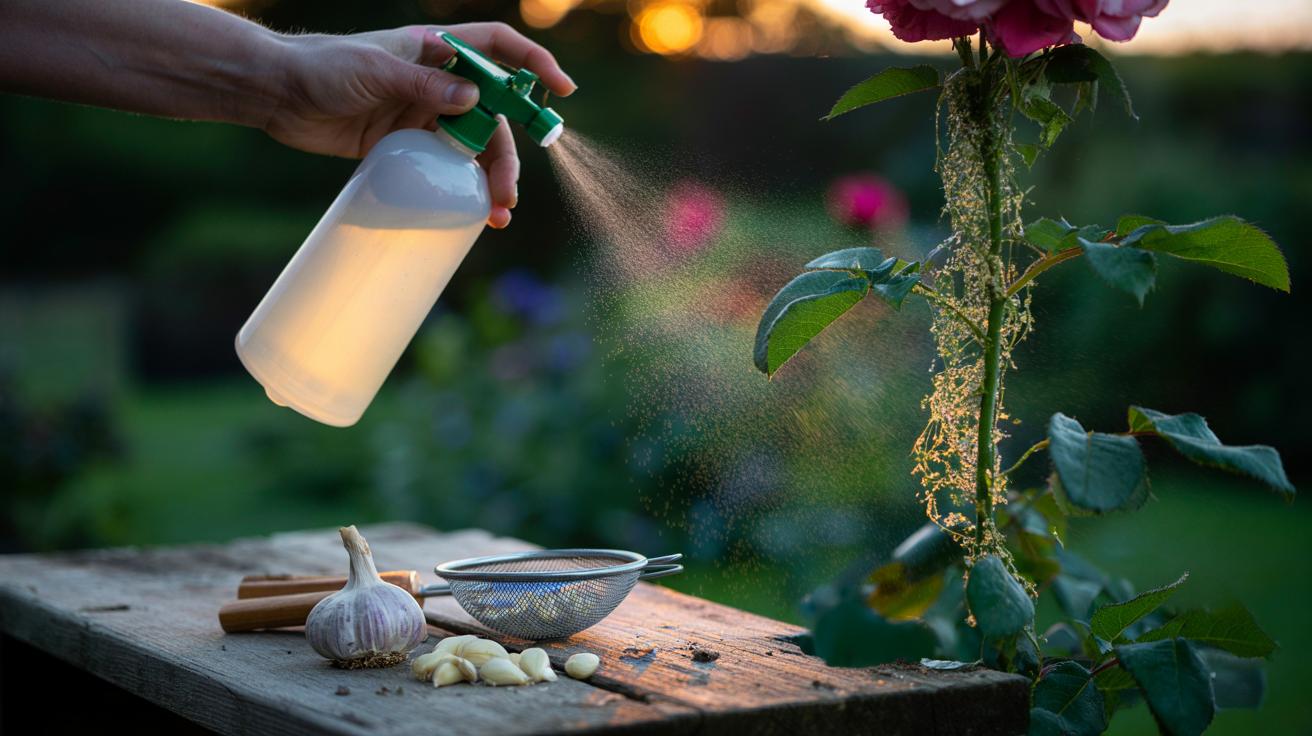
You can go from clove to mist in under an hour. Smash 4–5 fat cloves of garlic with the flat of a knife, skins on if you’re in a rush. Steep them in 500 ml of hot (not boiling) water for 20–30 minutes to coax out volatile sulphur compounds. Strain. Add a tiny drop of mild liquid soap as a surfactant—just enough to help the spray stick. Top up with cool water to 1 litre. Transfer to a clean trigger bottle with a fine mist. Always patch-test on a leaf and wait 12 hours if your plants are delicate.
| Step | Ratio/Timing | Notes |
|---|---|---|
| Crush cloves | 4–5 per 1 L | More cloves = stronger odour |
| Steep in hot water | 500 ml, 20–30 min | Do not boil; preserves volatiles |
| Strain and dilute | Top to 1 L | Fine mesh or coffee filter |
| Add surfactant | 1–2 drops | Unscented, mild soap |
| Apply at dusk | 1 thorough pass | Target leaf undersides and tips |
Apply at dusk when bees are back in the hive and leaves are cooler. Aim for the undersides, where aphids cluster and new growth curls. A gentle, even mist is best; drips waste the mix and may mark petals. If rain is due within two hours, wait—downpours erase your work. Refrigerate leftover spray and use within 48 hours; the chemistry fades. Spray only what you need, and keep it off blooms to protect pollinators. If the infestation is dense, start with a sharp blast of water to dislodge colonies, then follow with the garlic film.
Smarter Use in the Garden: Safety, Timing, and Allies
Garlic is powerful, but it’s not a sledgehammer. Keep concentrations sensible to avoid leaf stress, especially on soft herbs and young seedlings. Think intervention, not saturation. Do not spray during bright midday sun or heatwaves. Dusk is safer for petals and kinder to bees. Repeat every three to four days while pressure persists, then stop. The goal is to reset the balance and let predators do the rest. Watch for ants: blocking their trails with horticultural glue bands or moving pots breaks the aphid protection racket.
Build resilience around the spray. Interplant garlic, chives, and onions beneath roses and along broad bean rows to create a low, consistent sulphur scent; it won’t halt every migrant winged aphid, but it nudges them elsewhere. Nasturtiums make effective trap crops, luring pests away from edibles. Encourage allies: a shallow water dish with stones, a sunny patch for hoverfly larvae, a small bug hotel. Start each week with a hose-down to remove honeydew and sooty mould that shelter pests, then follow with a light garlic pass if new clusters appear.
Garlic is a repellent, not a cure-all. In glasshouses, combine it with yellow sticky cards and strict ventilation to reduce aphid flight and fungal risk. Outdoors, prune badly distorted tips and dispose of them—don’t compost if heavily infested. If you see plant viruses spreading (mottled leaves, stunted growth), escalate: consider horticultural soft soap or oil in rotation, or introduce bought-in ladybirds for a short, sharp boost. The art lies in timing and restraint, not brute force.
Aphids arrive fast, but you can answer faster. The garlic method is quiet, thrifty, and pleasingly domestic—a saucepan, a sieve, a twilight walk with a mister. One evening’s effort often buys a week of peace for roses, beans, and balcony peppers. Keep notes on which varieties shrug off pressure, when flights peak in your postcode, and how many passes you truly need. If outbreaks persist, rotate tools rather than doubling down. Ready to reclaim your plants with a sunset spray—or will you tailor this garlic tactic into your own integrated, pollinator-safe routine?
Did you like it?4.5/5 (21)