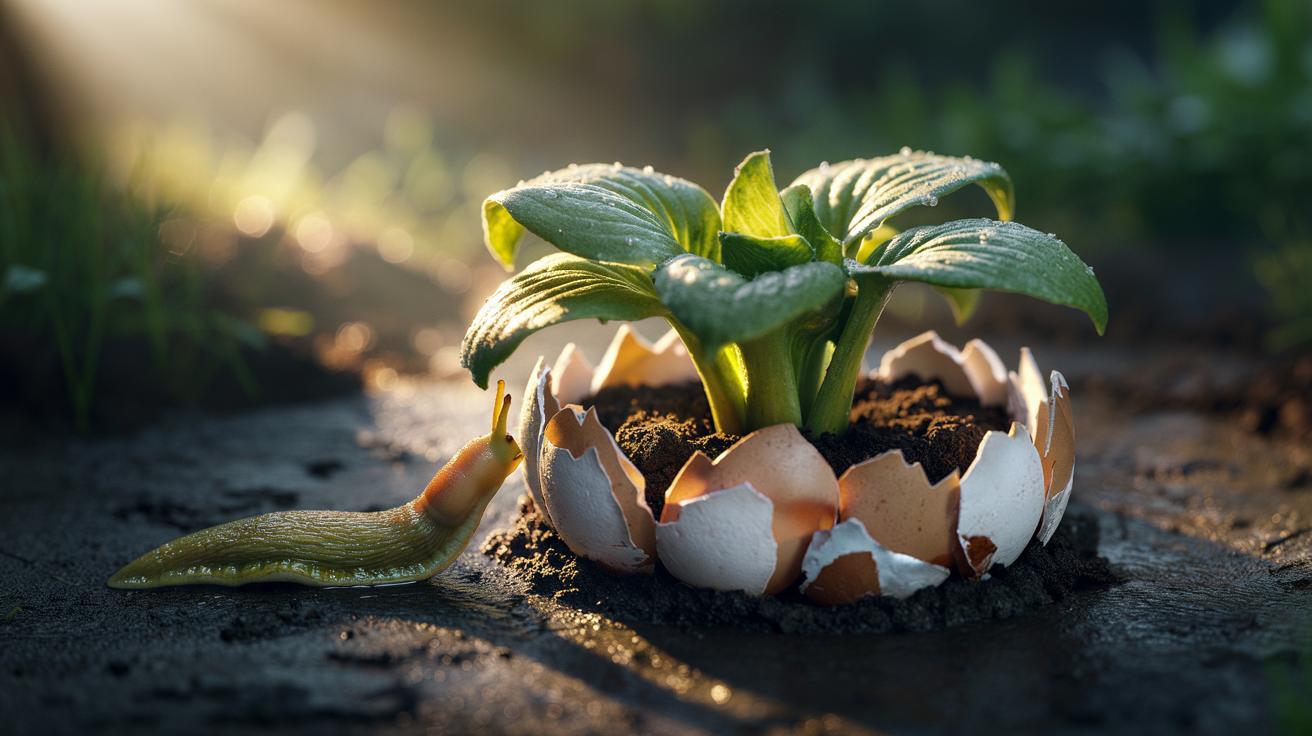
In a nutshell
- 🐌 Eggshell barriers act as a mechanical deterrent, creating friction and micro-abrasion that increase mucus loss, making slugs avoid crossing—especially overnight.
- 🥚 Prep matters: rinse, bake at 120–150°C for 10–15 minutes, crush to 3–8 mm, then lay a continuous 5–8 cm ring; keep foliage from bridging the barrier for best results on pots and seedlings.
- ☔ Effectiveness relies on dry conditions; rain blunts edges and compacts fragments, so check nightly, fluff, and replenish—expect deterrence, not total eradication.
- 🧰 Layer tactics: pair shells with copper tape, wool pellets, or iron phosphate bait; water in the morning, raise pots, and support predators for a wildlife-friendly strategy.
- 🌿 Smart, low-cost reuse of kitchen waste delivers quick protection by morning; prioritise sharpness and continuity, and refresh monthly to keep damage down.
Every spring, gardeners across the UK wake to nibbled hostas and shredded lettuce, the night’s quiet interrupted only by invisible raiders. Slugs. Chemical pellets feel like overkill, and traps can be messy. Enter the humble breakfast leftover: eggshells. When used as a ring around vulnerable plants, they create a low-cost, wildlife-friendly barrier that can work from the very first night. The appeal is obvious. It’s quick, frugal, and zero-pesticide. But does it truly keep slugs away, and why does it seem most effective overnight? Here’s the science, the method, and the caveats—so you can turn kitchen waste into a smart, mechanical line of defence around your beds and pots.
How Eggshell Barriers Deter Slugs Overnight
Slugs move on a single muscular foot coated in mucus. That slime reduces friction so they can glide over soil, bark, even razor-like grit. A ring of coarsely crushed eggshells changes the physics at the point of contact. The irregular shards increase friction and deliver micro-abrasion against the slug’s soft sole. Crossing the perimeter suddenly demands far more mucus and energy. Crucially, it accelerates moisture loss, which slugs instinctively avoid—especially during breezy or cool nights when the air can still sap their hydration despite darkness.
On clean, dry nights, the barrier behaves like a belt of broken glass at slug scale: uncomfortable, risky, and not worth the trip when other, easier meals are nearby. Shells must stay dry to be effective, because smooth, damp fragments lose their bite and can even compact into harmless grit. Eggshells aren’t a poison; they’re a mechanical deterrent. You’re not killing slugs, you’re persuading them to feed elsewhere. Expect the strongest results around isolated targets—potted hostas, young lettuces, strawberries—where the ring can be kept continuous and unbridged by mulch or leaves touching the outside soil.
Preparing and Laying an Effective Eggshell Ring
Rinse your shells, then bake them at 120–150°C for 10–15 minutes to sterilise and thoroughly dry. This step deepens the snap, making shards sharper and longer-lasting. Crush by hand or with a rolling pin to pea- to rice-sized fragments—think 3–8 mm pieces. Avoid powder; it compacts and offers less abrasion. Coarse texture does the hard work. Store the dry shards in an airtight tub so you can top up quickly after wet weather.
Lay a continuous ring 5–8 cm wide around each plant, two rings for prized specimens. Press lightly so the shards interlock but remain jagged. Keep foliage from touching the ground outside the barrier—any leaf touching soil forms a bridge slugs will gladly use. In beds, treat the ring like a moat and keep it clear of mulch. On pots, the rim is prime real estate: glue a narrow strip of crushed shell into a bead of outdoor-safe adhesive, or simply maintain a thick, loose collar at the base.
Inspect nightly for gaps. After rain, fluff and replenish. Replace monthly in high-traffic spots. Eggshells will slowly weather into the soil and contribute trace calcium carbonate, but not enough to skew pH in typical UK garden beds. The goal is reliability, not mineral amendment, so prioritise sharpness and continuity every time.
Limits, Myths, and Smarter Combinations
There are limits. Heavy rain blunts edges and drives slugs across anyway. Large, determined adults will sometimes brave the discomfort for succulent targets. Myth-busting matters too: eggshells do not “melt” slugs; and while they contain calcium, they won’t meaningfully enrich soil or toughen plant cell walls in the short term. Think deterrent, not cure-all. If a stem or leaf touches ground beyond the ring, results collapse. Tidy perimeters and dry conditions are everything.
Combine methods for tougher nights. Morning watering keeps surfaces drier after dusk. Lift pots on feet to deny hiding places. Encourage predators—hedgehogs, frogs, ground beetles, thrushes—by offering habitat and ditching metaldehyde. For high-value crops, integrate other barriers or baits that play nicely with wildlife:
| Method | How It Works | Best Use | Weather Resilience | Wildlife Impact | Maintenance |
|---|---|---|---|---|---|
| Eggshell ring | Abrasive, high-friction barrier | Pots, isolated seedlings | Weak in persistent rain | Benign | Top up after rain |
| Copper tape | Mild galvanic tingle on contact | Containers, raised bed rims | Good if kept clean | Benign | Wipe algae; replace yearly |
| Wool pellets | Fibrous, scratchy mat | Row edges, ornamentals | Moderate in damp | Benign | Refresh as it slumps |
| Iron phosphate bait | Ingested stomach disruptor | High-pressure infestations | Works in wet | Wildlife-friendly when used as directed | Sparingly, spot-applied |
Used together, these options create layered protection: dry, scratchy surfaces; clean pot rims; minimal night-time moisture. The result is fewer bites overnight and healthier foliage by breakfast.
Eggshells won’t win every battle, yet they shine as a quick, sustainable fix that turns kitchen waste into a smart barrier. They’re best for pots and young plants, in dry spells, and as part of a broader, wildlife-first strategy that prioritises habitat and habit—tidy perimeters, morning watering, and sharp, continuous rings. Think like a slug, remove the easy routes, and keep the edge sharp. Ready to try it tonight: which plants will you ring first, and what combinations will you test to keep your beds clean by morning?
Did you like it?4.4/5 (28)