In a nutshell
- 🌿 Calcium from eggshells strengthens cell walls, stabilises membranes, and supports new growth, delivering sturdier basil, mint, and parsley with fewer stress blemishes.
- 🥚🔬 Prep matters: rinse, dry, heat, then grind to a fine powder; top-dress 1–2 teaspoons per 15 cm pot or 1–2 cups per m², with a vinegar extract for fast, sparing boosts.
- 🧪📊 Watch pH and bioavailability: eggshells (calcium carbonate) dissolve faster in mildly acidic soils; compost and microbes improve release, while hard water means lighter dosing and seasonal soil tests.
- 🌱🪴 Target the right herbs and timing: basil, mint, and parsley respond most; woody Mediterranean herbs benefit as a buffer; apply “little and often” before growth flushes and during transplants.
- ✅📓 Practical plan: pair eggshell calcium with balanced nutrients, organic matter, and steady moisture—waste becomes resource, and herbs gain resilience without over-liming.
What if your most reliable herb booster were already on the breakfast table? Cracked and tossed, eggshells are a slow, steady source of calcium that gardeners overlook, yet they can transform basil, parsley, mint, and woody Mediterranean favourites. The science is simple, the practice is thrifty, and the results can be striking: sturdier stems, smoother foliage, fewer stress-induced stumbles. Because calcium is largely immobile inside plants, a consistent supply at the root zone is critical for lush growth. Done right, eggshells don’t just “add nutrients”; they nudge soil chemistry, feed microbes, and help herbs regulate water and heat. Waste becomes resource. Fragile seedlings become confident plants.
Why Calcium Transforms Herb Growth
Calcium is the scaffolding element. It cross-links pectins in cell walls, strengthening every new leaf and stem. In herbs, that translates to leaves that hold their shape under sun and wind, and roots that explore soil rather than stall at the surface. Calcium also moderates membranes and signalling, so stomata open and close with less drama during hot spells. The result feels deceptively simple: steadier growth, fewer split stems, greener, plumper foliage. Basil and mint show it fastest. Parsley, too. When calcium runs short at the growing tip, you see new leaves distort, edges scorch, and growth hesitate even if nitrogen is plentiful.
There is a second, quiet effect. With stronger walls and membranes, herbs leak fewer sugars into the rhizosphere, which can reduce opportunistic pathogens around tender roots. That doesn’t make calcium a fungicide. It does tilt the balance. In mixed containers, the benefit is often structural: oregano and thyme keep their compact poise while fast drinkers like coriander stop sulking after hot days. Calcium is not a miracle cure, but in the herb bed, it removes a limiting factor you never knew was there. Think of it as insurance for new tissues, not a tonic poured on old leaves.
How to Prepare and Apply Eggshells
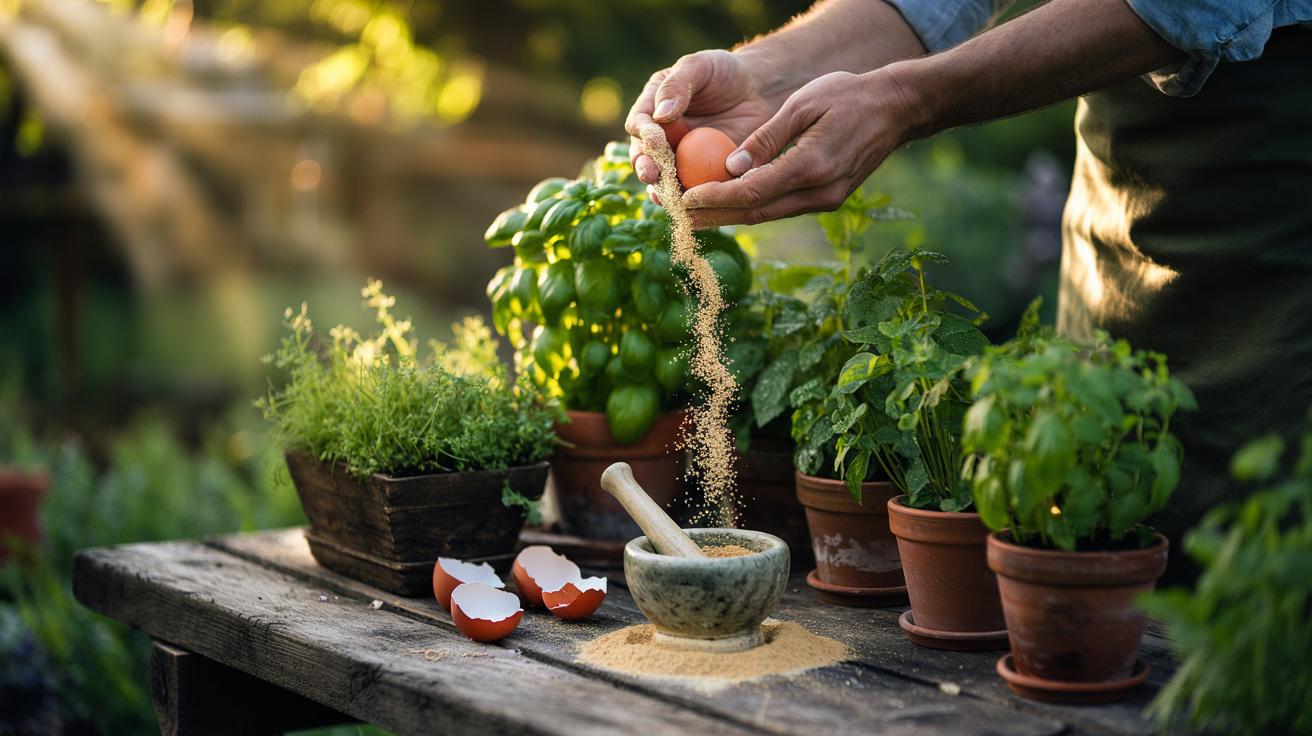
Rinse shells, dry thoroughly, then heat at 120–150°C for 10–15 minutes to sterilise and make them brittle. Grind to a fine powder; a spice grinder or mortar does the job. The finer the grind, the faster the release. For containers, top-dress 1–2 teaspoons per 15 cm pot monthly during active growth, lightly scratch in, then water. For beds, broadcast 1–2 cups per square metre once a season. Start small, because you’re also nudging soil pH upward. Mix powdered shells into compost to precondition them; microbes and organic acids accelerate dissolution.
If you need quicker availability, make an eggshell vinegar extract: cover 2 tablespoons of ultra-fine powder with 1 cup clear vinegar; let it fizz 24–48 hours until bubbling slows, then dilute 1:20 with water and drench soil sparingly. This creates soluble calcium salts for rapid uptake near root tips. Avoid routine foliar spraying; calcium rarely moves from old to new tissues. Apply little and often during establishment, transplant shock, and heat waves. Always pair calcium with balanced feeding, because luxuriant foliage still needs nitrogen and potassium to perform.
| Preparation | Release Speed | Best Use | Notes |
|---|---|---|---|
| Crushed shells | Very slow | Long-term bed amendment | Minimal short-term effect; texture only |
| Fine powder | Moderate | Top-dressing pots, seedling mix | Most practical for herbs |
| Vinegar extract | Fast | Quick fixes, transplants | Use sparingly; watch pH |
| Compost integration | Moderate–slow | Routine soil building | Microbes boost bioavailability |
Soil Science: pH, Bioavailability, and Microbes
Eggshells are mostly calcium carbonate. They dissolve when organic acids and root exudates lower the micro-pH around particles. In neutral to alkaline soils, that reaction slows, so expect patience rather than fireworks. If your garden already tests above pH 7, go light on shells or prioritise composted additions. In slightly acidic mixes (pH 6.0–6.8), powdered shells release steadily and buffer swings from rain or hard tap water. This is good news for basil, coriander, and mint, which dislike sharp pH drops during summer watering.
Bioavailability depends on biology. Mycorrhizae and free-living bacteria secrete acids that liberate calcium from particles you can’t see. Blend shells with green waste or coffee grounds to feed that workforce. Beware interactions: excessive calcium at high pH can tie up phosphorus, dulling growth despite plenty of leaf colour. Hard water already supplies calcium bicarbonate; in those areas, reduce eggshell inputs and monitor with a simple soil test kit each season. Calcium is supportive, not standalone—pair it with organic matter and consistent moisture so roots can reach the buffet. When that trifecta clicks, herbs respond with thicker petioles, confident new growth, and fewer stress blemishes after heat spikes.
Which Herbs Benefit Most and When
Basil shows the clearest response. Tip scorch and puckered new leaves often fade when the root zone receives regular, gentle calcium. Mint and lemon balm grow plusher, because stronger cell walls reduce wilting between waterings. Parsley appreciates the support during early leaf expansion. For coriander, the win is subtle: steadier growth before bolting, especially if spring swings from cold to hot. Apply powdered shells at sowing in seed compost, then again at first true leaves, to keep cell division tidy. In pots, a pinch monthly is enough.
Woody Mediterranean herbs—rosemary, thyme, sage, oregano—prefer slightly alkaline, free-draining soils, so eggshells help more as buffer than fertiliser. Mix fine shell powder into gritty compost at planting, but resist heavy doses. These herbs resent soggy, lime-choked mixes. Chives and dill? Moderate gains only; they lean on nitrogen and steady moisture. Timing matters as much as species: add calcium before rapid flushes (late spring, post-pruning), and during transplanting when roots rebuild. The rule of thumb is simple: little and often, targeted at new growth phases. Pair with mulch to stabilise moisture and you magnify every benefit without courting pH creep.
Eggshells won’t replace a balanced feeding plan, yet they elevate it. They turn kitchen waste into structure, resilience, and quietly confident herbs that shrug off heat wobbles and erratic rain. Start with a jar of fine powder, a soil test, and a light hand. Watch how basil stands taller and parsley spreads with composure. Calcium is the steady rhythm section behind your herb garden’s melody. Ready to trial it bed by bed, pot by pot, and note the difference across a month of growth—what will you test first, and how will you measure the change?
Did you like it?4.5/5 (23)