In a nutshell
- 🌿 Salt acts fast: It dehydrates weeds via osmotic shock, visibly wilting seedlings on paths, patios, and gravel within 24–48 hours.
- 🧪 Right recipe: Use a brine of 100–150 g/L for routine spots and 200 g/L for tough rosettes; apply on a dry day with no rain forecast.
- 🎯 Precision matters: Spot-treat cracks, keep spray low, add a drop of washing-up liquid for coverage, and avoid runoff onto soil, lawns, or borders.
- ⚠️ Safety and UK rules: Protect pets and nearby plants; salt can harm soil health. Check HSE/DEFRA guidance before repeated or large-scale use.
- 🧹 Aftercare prevents regrowth: Sweep debris, refill joints with kiln-dried sand, top up gravel, and rotate with boiling water or mechanical brushing for longer-lasting clear paths.
Every spring in Britain, after a warm shower and a shy burst of sun, weeds muscle through block paving and gravel drives as if invited. There’s a blunt, old-fashioned fix hiding in your kitchen: salt. On hard surfaces, it acts quickly, quietly, decisively. Gardeners swear by the overnight transformation when dandelions, bittercress, and moss shrivel into crisp relics. Used correctly, common salt is a powerful natural herbicide for paths and patios. Yet it’s not a toy. The same force that topples weeds can exhaust soil life and scorch nearby borders if misused. Here’s the science, the method, the pitfalls—and how to keep your paths pristine without a constant chemical arms race.
How Salt Kills Weeds Overnight
At its core, sodium chloride overwhelms plants by creating intense osmotic pressure. Water is pulled out of cells, collapsing the delicate machinery that keeps leaves turgid and roots exploring. In many pavement weeds, thin cuticles and exposed meristems make the effect startlingly rapid. Salt delivers a dehydration shock that can turn perky rosettes into rubber by morning. It’s not just desiccation; sodium ions also disrupt nutrient uptake and enzyme pathways, compounding the damage. On hardstanding, with little organic matter to buffer the blow, the response is swift.
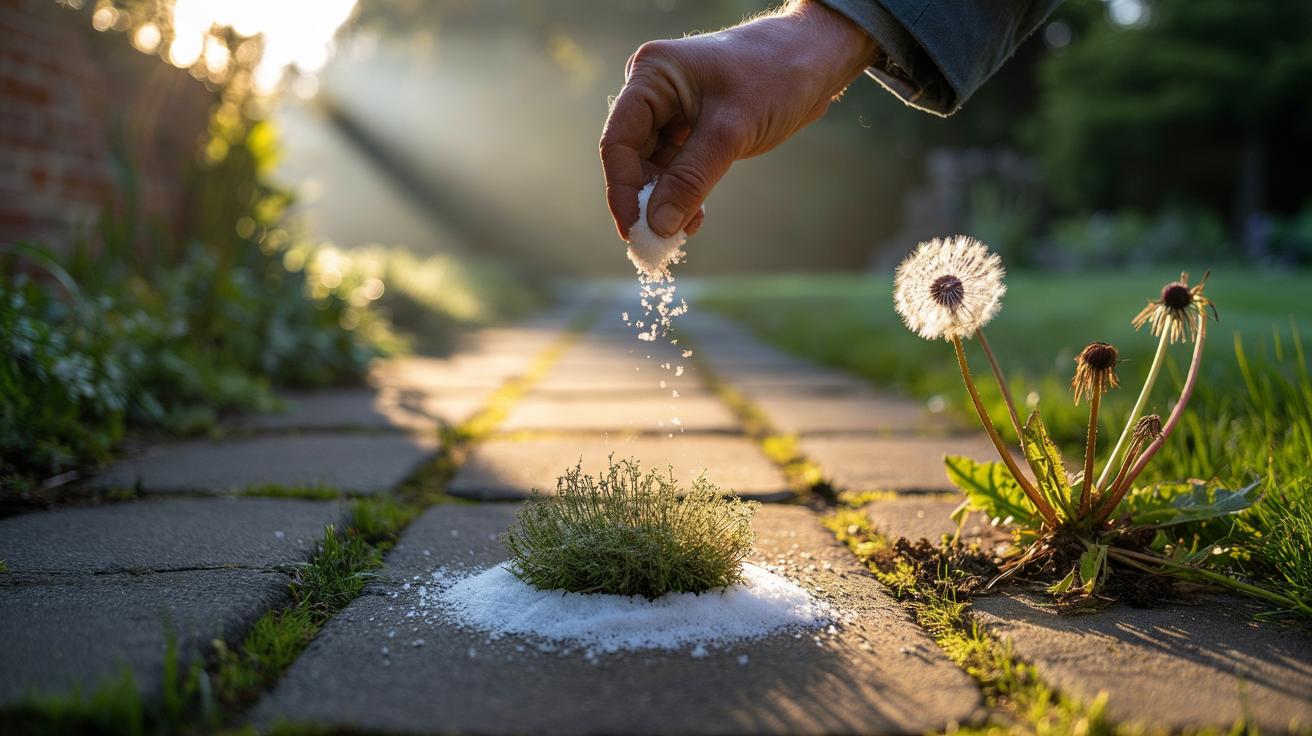
That’s why paths, patios, and gravel drives are ideal targets. The salt stays where it’s put and doesn’t mingle with planting beds—if you’re careful. A coarse sprinkle into cracks draws moisture overnight, wicking brine straight to the root crown. Sun accelerates the hit by stressing already thirsty tissues. Expect visible wilting within hours and browning inside 24–48 hours, especially in seedlings and shallow-rooted nuisances.
It’s not a silver bullet. Perennial weeds with deep taproots may rebound if only the tops are scorched. For stubborn tufts, repeat a light application after seven days to exhaust regrowth. Keep doses modest; a heavy hand raises the risk of runoff and damage beyond the target zone.
The Right Recipe and Method for Pathways
For a fast, targeted strike, mix a simple brine: 100–150 g salt per litre of hot water for routine work, 200 g/L for tough clumps on paving. Stir until dissolved, decant into a hand sprayer with a narrow cone, and wet leaves until just glistening—no drips. Always apply on a dry day with no rain forecast for 24 hours. Hot water helps carry ions into leaf pores and speeds the hit. If you prefer dry application, broadcast a pinch of coarse salt directly into cracks, then mist lightly so crystals begin to dissolve in situ.
| Application | Salt Rate | Best For | Notes |
|---|---|---|---|
| Light brine spray | 100–150 g/L | Seedlings, moss | Thin, even film; avoid runoff |
| Strong brine spray | 200 g/L | Established rosettes | Spot treat only; reassess in 48 h |
| Dry crystal pinch | 1–2 g per crack | Block paving joints | Mist after placing to activate |
Technique matters. Keep the nozzle low, shield the spray from wind with your free hand, and stop at the joint edge—never over bare soil near borders. Add a drop of washing-up liquid as a wetting agent if leaves are waxy; it improves coverage with lower volume. Less is more: the goal is precise contact, not white crusts. Check back next day, remove shrivelled matter with a stiff brush, and seal joints with fresh sand to slow new arrivals.
Safety, Soil Health, and UK Considerations
Salt is simple, but indiscriminate. What harms weeds can also harm hedges, lawns, and soil life. Avoid use on porous edges where brine can leach into beds. Keep well away from tree roots that wander beneath paving. Pets? Salt can irritate paws and tempt thirsty dogs to lick residues; rinse treated areas once weeds have died and the job is done. Metal fixtures and tools corrode faster around salt—store sprayers dry and wash them out after use.
Think hydrology as well as horticulture. The UK’s stop-start showers can shuttle brine into drains and watercourses. Apply in small, targeted doses, and never before heavy rain. On gravel, work in tight zones and rake up dead foliage to prevent saline hotspots. Do not use salt on vegetable beds or permeable garden soil, where it lingers and reduces fertility by displacing potassium and calcium.
There’s also regulation. In the UK, only authorised plant protection products are approved for routine weed control. Using home substances carries responsibilities and local rules may apply; professional users especially must follow authorisations. Check current HSE/DEFRA guidance before large-scale or repeated applications. If in doubt, choose an approved product for compliance-critical sites, or stick to mechanical control on shared pavements.
Smarter Aftercare: Keeping Paths Clear Longer
Winning overnight is satisfying; staying weed-free is the real prize. Start by addressing the seedbed. Sweep grit, soil, and leaf litter off paving weekly so wind-blown seeds can’t germinate. Refill joints with kiln-dried or polymeric sand after clearing, creating a tougher, drier gap that doesn’t favour weed roots. Where gravel thins, top it up to a 4–5 cm depth so light can’t reach the fines beneath. Prevention beats repeated dosing every time.
Alternate tactics help break the cycle. A kettle of near-boiling water knocks back moss in seconds without residues. A wire brush on a drill head scours lichen from joints. For long runs of block paving, a hot-foam or steam pass in spring can clear a season’s seedlings in an hour. Reserve salt for spot treatments, not a blanket routine, and you’ll reduce environmental load while keeping speed on your side.
Set a calendar. Early April, mid-June, and late August checks catch peak flushes, especially after rain. Photograph trouble patches and compare after each sweep to track what’s working. If a corner keeps greening, consider shade, leaking gutters, or compacted joints inviting moisture. The best defence is a dry, clean surface with tight joints and little organic debris. That, plus a judicious pinch of salt when needed, keeps pathways sharp without numbing the life of your garden.
Salt can be a ruthless, elegant fix for weeds on hard surfaces, delivering visible results while you sleep. Yet power demands judgment: precision application, tiny doses, and respect for soil and water. Treated as a scalpel rather than a sledgehammer, salt restores clean lines to paths and drives quickly and cheaply. Ready to try a measured brine on your own paving, or will you stick with brushes, hot water, and approved products—what mix will you choose for the season ahead?
Did you like it?4.6/5 (20)