In a nutshell
- 🔥 Capsaicin triggers the trigeminal nerve in mammals, creating a hot, unpleasant sensation that deters squirrels while leaving birds unaffected; a humane, non-toxic solution.
- 🧰 Safe application: dust rings around bulbs and planters, mix into compost, or brush a thin paste on feeder poles; wear gloves and apply on still, dry days for reliable coverage.
- ☔ Improve weatherproofing by adding vegetable/rapeseed oil or a sticker to sprays, blending powder with mulch/coir, and timing light reapplications to suit garden microclimates.
- 🐦 Wildlife-friendly ethics: protects pollinators and birds; pair chili with layered defences like metal baffles, fine mesh, and tidy hygiene while avoiding pet exposure.
- 💷 Practical pay-off: affordable, biodegradable, and easy to source, delivering continuous protection for UK gardens with minimal, regular upkeep.
When squirrels treat your borders like a buffet and your bird feeder like a drive‑through, the answer can be as simple as the spice aisle. Ground chili powder, rich in capsaicin, irritates mammalian mouths and noses without causing injury, creating a reliable behavioural barrier that keeps persistent raiders at bay. It’s inexpensive, easy to deploy, and adaptable to changing weather, which makes it a favourite with UK gardeners seeking a humane solution that works through the seasons. It stops the nibble before it starts. With a few tricks to help it cling to soil, bulbs, and feeder poles, this fiery dust becomes a quiet, continuous guard for your beds and borders.
How Capsaicin Tricks a Squirrel’s Senses
Squirrels investigate with whiskers and tongues. That’s where capsaicin does its work. The compound activates the trigeminal nerve, the sensory network that signals heat and pain, so a mouthful of treated compost or a lick at a feeder pole feels fiercely hot to them. Birds, by contrast, lack receptors sensitive to capsaicin, so they feed as usual. This is a targeted deterrent, not a poison.
Because the effect is sensory, not systemic, the deterrence is immediate and memorable. One sharp encounter often teaches avoidance, and repeated low‑level reminders reinforce the lesson without injuring wildlife. That’s why chili powder is valued as a humane, non‑toxic strategy in wildlife‑busy gardens where traps or harsh chemicals are unacceptable. The scent lingers at soil level; the taste cues intensify at contact points such as pot rims and fence rails. Short message to the intruder: not worth the hassle.
Consistency matters. A light, regular presence maintains the boundary. Squirrels are clever but risk‑averse; when every nibble tastes threatening, they move to easier pickings next door.
Practical Ways to Apply Chili Powder Safely
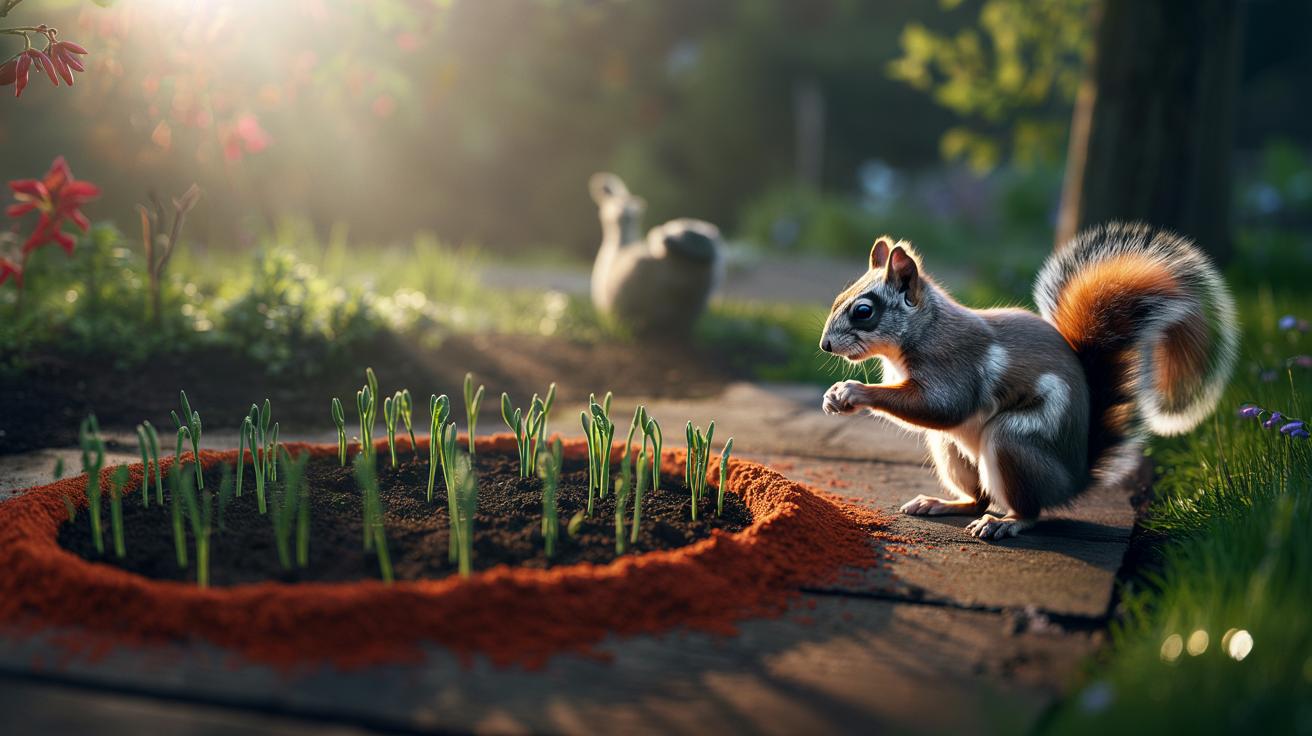
Start simple. Dust a fine ring of chili powder around bulbs, seedlings, and planter rims. Sprinkle lightly over the top inch of compost and gently rake in so rain doesn’t wash it away at once. For vertical hot‑spots—feeder poles, fence tops—mix a paste: chili powder and warm water with a drop of eco‑friendly washing‑up liquid for spread, then brush on thinly. Wear gloves, avoid touching eyes, and keep children and pets away while you work. Apply on still, dry days for best adhesion and minimal drift.
| Chili Source | Capsaicin Strength | Suggested Ratio | Approx. Cost (UK) | Reapplication |
|---|---|---|---|---|
| Standard chili powder | Medium | 1 tbsp per litre water (spray) or dry dust | £2–£4 per 100 g | Every 5–7 dry days |
| Cayenne powder | High | 1 tsp per litre water; thinner paste | £3–£5 per 100 g | Every 7–10 dry days |
| Chili flakes | Variable | Blend to powder; mix into mulch | £1.50–£3 per 100 g | After heavy rain |
On feeders, choose birdseed coated with chili oil or add a manufacturer‑approved hot pepper suet; birds won’t notice, squirrels will. Always test a small area first to ensure delicate foliage isn’t irritated by surfactants, and never dust blooms directly. Keep store‑cupboard spices dry and sealed so potency remains high between uses.
Weatherproofing for Continuous Protection
Rain is the saboteur of many deterrents. Beat it with binders. Stir a teaspoon of vegetable or rapeseed oil into a litre of chili spray to help the capsaicin cling to surfaces. For soil, blend powder with fine mulch or coir to create more surface area and better grip. A touch of horticultural molasses or a plant‑safe resin sticker forms a tacky film that slows wash‑off without sealing the soil. Make the heat stick and you extend protection dramatically.
Timing helps. Reapply ahead of rainy spells, not after they start, so the first drops set the film rather than sweep it away. In long dry periods, refresh lightly to keep the scent cue active. Around bulbs and root crops, mix a small amount into the planting hole backfill; as the soil settles, it creates a slow‑release zone that discourages digging for weeks. On verticals, a very thin paste layer under a baffle or overhang stays sheltered and potent.
Think of your garden as microclimates. Exposed beds need more frequent top‑ups; sheltered courtyards fewer. Observe where raiders test your defences and concentrate applications there for efficient, continuous coverage.
Benefits, Limits, and Ethics for UK Gardens
The advantages are practical and principled. Chili powder is affordable, readily available, biodegradable, and compatible with organic methods. It spares pollinators and birds, which do not react to capsaicin, while nudging mammals to move on. Pair it with good hygiene—fallen seed cleared, bins sealed—and with simple physical measures like metal baffles, fine mesh around seedlings, and tidy pruning that removes launch points to feeders. Layered defences create resilience.
There are limits. High winds can carry dust; heavy rain dilutes it; a few bold squirrels may test repeatedly. To keep things fair and lawful, avoid over‑concentration that could irritate pets, and never smear paste where dogs or curious toddlers might lick. Rinse hands and tools thoroughly. In shared spaces, put up a polite note about chili use so neighbours aren’t surprised by the smell. If you keep a hedgehog‑friendly garden, prioritise ground‑level barriers over broadcast dusting.
The ethical calculus is simple: discourage, don’t harm. Chili powder does that well, and when used thoughtfully, it becomes a steady, low‑impact line of defence that fits the rhythm of a British growing season.
Used smartly, chili powder turns from a kitchen staple into a quiet security team for your plants, bulbs, and feeders. Its continuous power lies in sensory persuasion, not force, and in the gardener’s knack for placing it where it matters most and sticking with light, regular upkeep. The result is fewer raids, less damage, and more calm afternoons watching birds feed without a furry hijack. Ready to trial this spicy shield in your own plot, and where will you place your first protective ring?
Did you like it?4.5/5 (22)