In a nutshell
- 🌱 Banana peel supplies quick-access potassium, modest phosphorus, traces of calcium/magnesium, plus sugars that stimulate the root–microbe zone—useful overnight but not a complete fertiliser due to low nitrogen.
- ⚗️ Make an overnight tonic: rinse and finely chop a peel, steep 8–12 hours, strain, then dilute 1:1 and apply to soil at dusk; use the liquid the same day to avoid odour and microbial overload.
- 🌼 Best for bloomers and fruiters—roses, tomatoes, peppers—and for containers or sandy mixes; pair with balanced NPK, avoid waterlogged media, and go light on seedlings or succulents.
- ⚠️ Myths and risks: burying whole peels is slow and attracts pests; more isn’t better—watch for sour odour, algae, and fruit flies; keep the tonic off foliage to reduce disease risk.
- 🧪 Smarter options: immediate-use blender slurry, low-odour dried peel, plus complements like seaweed extract, compost tea, and slow-release fertilisers; rinse shop-bought peels before use.
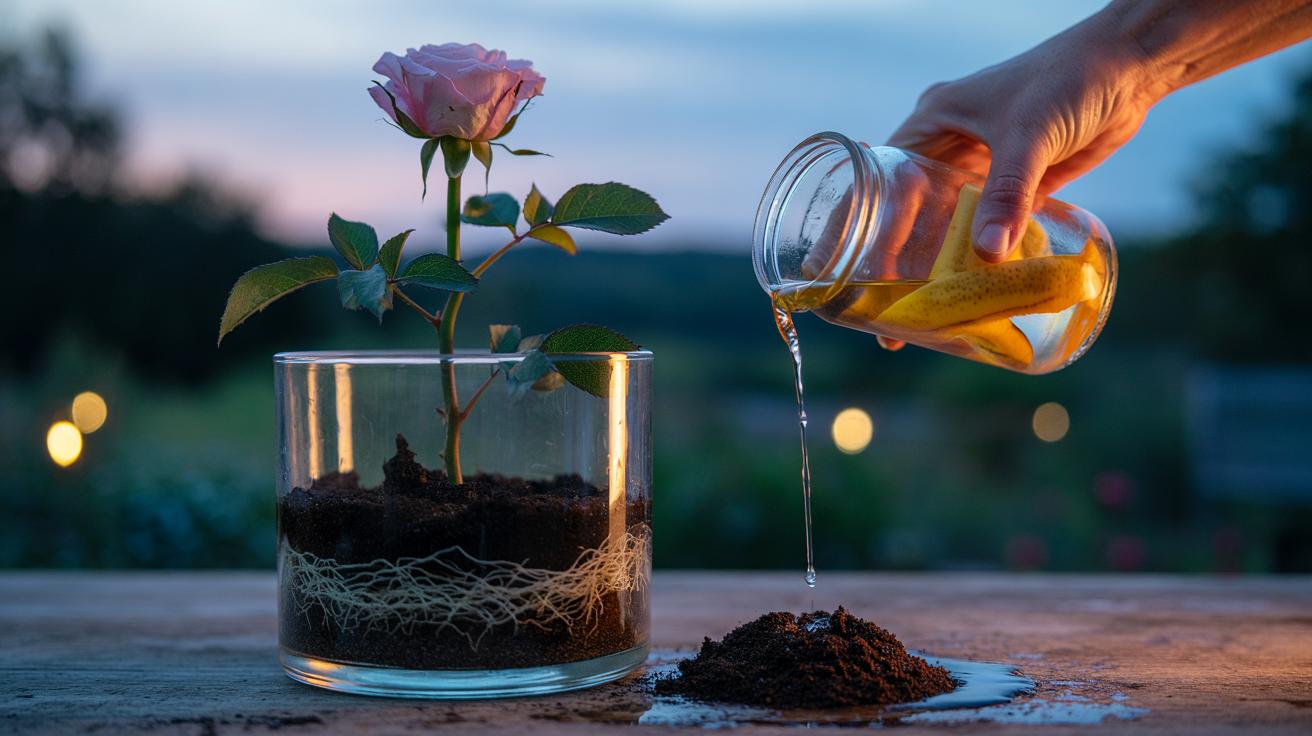
What if last night’s snack could become today’s garden boost? Banana peel, often binned without a second thought, hides a cache of plant-friendly compounds ready to support fast root activity. Steeped or finely chopped, it releases soluble potassium, modest phosphorus, traces of calcium and magnesium, plus sugars that wake up the soil’s helpful microbes. Roots don’t sleep; they respire and exchange nutrients round the clock. Provide the right molecules and the rhizosphere hums before sunrise. It’s low-cost, low-waste, and surprisingly effective when used with care. Think of banana peel as a gentle prompt to root health, not a miracle or a complete fertiliser.
Why Banana Peels Feed Roots So Quickly
Banana peels are rich in potassium (K), a key regulator of water balance and enzyme function inside plant cells. That single element helps drive turgor, strengthens stems, and supports flowering. There’s also phosphorus (P) for energy transfer and root development, calcium (Ca) for cell walls, and phenolic compounds that can influence microbial dynamics. When you chop or soak the peel, a portion of these compounds becomes immediately available in water, so they can move into the soil solution where roots and microbes can access them quickly. The rest breaks down over days via microbial action. This is why a simple overnight soak can yield a noticeable lift without waiting weeks for decomposition.
Roots keep working in the dark, releasing exudates that recruit bacteria and fungi. Add a mild infusion of peel-derived sugars and K, and the root–microbe partnership gains momentum. Timing matters: evening or dusk watering reduces evaporation and lets the rhizosphere equilibrate slowly. Still, there are limits. Banana peel is low in nitrogen, so it should never replace a balanced fertiliser during peak vegetative growth. Think of it as a supportive drink, not the whole diet. Used alongside compost, mulch, or an N-inclusive feed, it’s a targeted nudge toward resilience—especially for hungry bloomers like roses, peppers, and tomatoes.
| Component in Peel | Plant Role | Overnight Availability |
|---|---|---|
| Potassium (K) | Water balance, enzyme activation, flowering | Partly soluble in a quick soak |
| Phosphorus (P) | Energy transfer, root growth | Limited; more from gradual breakdown |
| Calcium (Ca) | Cell wall strength, signalling | Trace amounts in solution |
| Sugars & phenolics | Microbial stimulation in the rhizosphere | Quickly available as dissolved organics |
The Overnight Banana-Peel Tonic: A Quick Method
Here’s a clean, repeatable approach. Rinse one fresh peel to remove residue. Chop it finely; more surface area equals faster release. Add the pieces to a jar with 1 litre of clean water. Cap loosely and shake for 10 seconds to introduce oxygen. Steep for 8–12 hours at room temperature away from direct sun. Strain through a fine sieve or cloth into a watering can, then dilute 1:1 with water. Use the liquid the same day for best results; do not store for days as odour and microbes can build rapidly.
Apply around the base of the plant, not on foliage. Keep the tonic off leaves to reduce disease risk and sticky residue. A mugful for a small pot, up to a litre for a large container or in-ground shrub, is enough. Frequency? Every two to three weeks during active growth, less in winter. Avoid saturating already wet compost. Bury or compost the strained peel; chopping and mixing into an active compost heap is preferable to burying it whole, which can attract pests. If fungus gnats are a problem indoors, water in the morning and let the top centimetre of compost dry between waterings to discourage them.
When And Where It Works Best
This method shines with flowering and fruiting plants: roses, tomatoes, peppers, chillies, and container-grown ornamentals that show potassium hunger (weak stems, marginal leaf scorch, poor bloom). In sandy or soilless mixes that leach nutrients quickly, a light K-rich drench can stabilise growth between main feeds. It’s also useful after a heavy rain that may have flushed containers. Apply at dusk for maximum overnight contact time and minimal evaporative loss.
Go gentle with seedlings and salt-sensitive species. Succulents and cacti do not need frequent organic tonics; keep them on a lean, well-drained regime. In clay soils, avoid pooling—slow infiltration can create anaerobic pockets. Indoors, use a saucer and empty runoff promptly. Always consider the whole diet: pair the peel tonic with a balanced feed that supplies nitrogen for foliage and micronutrients for enzyme systems. Canary-in-the-coalmine signs of overuse include sour odour, algae on soil surfaces, and fruit flies. If any of these appear, pause applications and let the medium dry slightly between waterings.
Common Myths, Risks, And Smarter Alternatives
Myth one: “Burying whole peels feeds plants fast.” Not really. Intact peels break down slowly, draw in pests, and can mat into slimy layers that shed water. Chopping or soaking accelerates release and reduces nuisance. Myth two: “Banana peel is a complete fertiliser.” It isn’t. It’s K-forward with modest P and negligible N, so lush leafy growth will stall if this is all you provide. Myth three: “More is better.” Overdoing organics can deplete oxygen as microbes bloom. Excessive biological activity around roots can suffocate them in poorly aerated mixes.
Prefer low-odour options? Try a blender slurry: half a peel plus water, blitzed, then strained well; it’s fast but use immediately. For a tidier cupboard staple, dried and crumbled peels release more slowly with far less smell. Complementary boosters include seaweed extract (trace elements and growth hormones), compost tea (microbial diversity, if brewed safely), and quality slow-release fertilisers that cover NPK evenly. Always rinse shop-bought peels to reduce surface residues. And remember the simplest rule: if your plants already look vigorous and well-fed, the best “tonic” may be just consistent watering and good light.
Banana peel won’t replace thoughtful soil care, but handled smartly it delivers a swift, gentle nudge where plants feel it first: the roots. An overnight infusion adds soluble potassium and microbe-stirring sugars precisely when the rhizosphere is most receptive. It’s circular, frugal, and often visible in steadier turgor and cleaner blooms within days. Use lightly, observe closely, and fold it into a broader feeding routine. What plant in your patch would benefit most from a subtle night-time boost, and how will you test the difference against your usual feeding schedule?
Did you like it?4.7/5 (27)