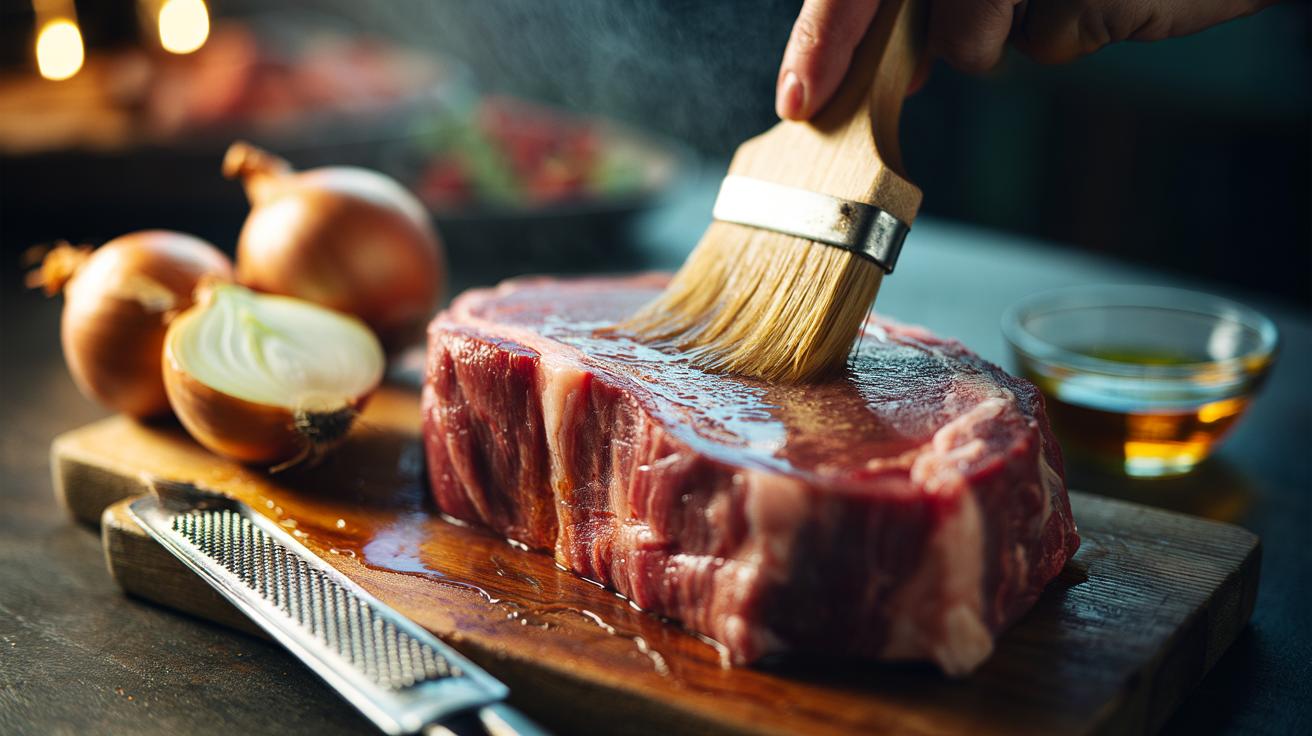
In a nutshell
- 🧅 Onion’s proteolytic enzymes target muscle proteins and connective tissue, relaxing fibres, boosting water-holding, and lowering shear force; sulfur compounds nudge pH for gentle, progressive tenderizing without harsh acidity.
- 🥩 Picking the right match: Yellow/brown onions suit beef flank/skirt/chuck (60–180 min), red for lamb leg/pork shoulder (45–120 min), sweet for chicken/pork chops (30–90 min); the cut matters more than onion type—avoid over-tenderizing the surface.
- 🧰 Technique essentials: Grate onion, separate juice and pulp; season at 1–1.5% salt, optional 1–2% sugar, plus a little oil; marinate chilled—thin steaks 30–60 min, working cuts 2–4 h, poultry 30–90 min; pat dry to maximise the Maillard reaction; boil any leftover marinade before reuse.
- 🛡️ Safety and balance: Keep everything cold and sealed; never exceed 30 minutes at room temperature; strain or briefly microwave juice then cool to soften bite without killing enzymes; layer flavour with salt, sugar, and oil; rest and slice across the grain.
- ✅ Payoff: Effortless, juicy cuts with a clean savoury profile—apply a thin coat, time it carefully, sear hot for crust, finish gently, and season at the end for lift.
Home cooks have long sworn by onion as a secret tenderizer, yet the science is even juicier than the folklore. In the humble bulb sit proteolytic enzymes and sulfur-rich compounds that coax tough muscle into submission, turning chewy steaks into effortless, juicy cuts. The process is gentle. It’s also precise. When handled well, onion transforms texture without turning meat mushy or masking its character. This guide explains how and why it works, the cuts that benefit most, and the practical steps that bring predictable results. Treat onion as a smart tool, not a blunt instrument, and tenderness follows.
How Onion Enzymes Tenderize Tough Fibers
Meat toughness stems from two main elements: resilient myofibrillar proteins in muscle fibres and the connective tissue that binds them. Onion brings a natural advantage. Its proteolytic enzymes begin clipping peptide bonds in surface proteins, disrupting the scaffolding that keeps fibres taut. That microscopic nicking matters. Protein filaments relax, water-holding capacity improves, and shear force—the objective measure of tenderness—drops. Sulfur-derived compounds from the Allium family also nudge pH and influence cross-linking, softening perception without harsh acidity. Crucially, onion’s action is targeted and progressive, not a scorched-earth soak like strong acids.
Time and temperature govern the outcome. Enzymes work at refrigerator temperatures, albeit slowly, and they denature with heat, so the work must happen before cooking. Salt, if added, helps unfold proteins and boosts juiciness by drawing in moisture; sugar tempers bite and browning. Keep contact mostly to the exterior—where it’s needed—and avoid drowning the meat. Think film, not bath. The result is a cleaner flavour and a supple bite that still eats like meat, not pudding.
Choosing the Right Onion and Cut
Not all onions, nor all cuts, respond the same way. For tenderization, you want assertive aromatics and active enzymes without overwhelming sweetness. Yellow (brown) onions are the dependable workhorse. Red onions deliver brightness and colour but can skew sharp. Sweet onions are mild; they add moisture and sugars yet bring gentler enzymatic punch. Pair the onion with the job: robust bulbs for robust cuts.
| Onion Type | Best Use | Indicative Time | Notes |
|---|---|---|---|
| Yellow/Brown | Beef flank, skirt, chuck | 60–180 min | Balanced bite; strong enzyme activity |
| Red | Lamb leg, pork shoulder | 45–120 min | Vivid aroma; strain to reduce harshness |
| Sweet | Chicken breast, pork chops | 30–90 min | Milder; adds browning sugars |
Cut matters more than onion variety. Thin steaks like flank and bavette need only a brief kiss to relax fibres before searing. Marbled, working muscles—think chuck or lamb shoulder—benefit from a longer window for enzyme access. Do not push beyond texture’s tipping point: once proteins unravel too far, the exterior turns pasty. Bone-in pieces and cubes invite the juice deeper via edges and seams. Keep the skin on poultry for protection, or lift it gently and brush beneath for targeted tenderizing.
Practical Techniques: Marinating, Rubbing, and Juicing
Grate a firm onion on the fine side, then squeeze to separate pulp and juice. Use the juice for uniform coverage and the pulp for spot treatment on stubborn areas. For every kilogram of meat, add 10–15 g of salt (1–1.5%) to the onion component, plus a teaspoon of neutral oil to distribute flavour and cushion volatility. Optional: 1–2% sugar by weight for browning and balance. Spices? Ground black pepper, cumin, or smoked paprika play well; avoid fragile herbs that can turn swampy.
Bag the meat with a thin coat of onion juice, press out the air, and refrigerate. Timings, at 4–5°C: thin steaks 30–60 minutes; thicker working cuts 2–4 hours; poultry 30–90 minutes. Short and chilled beats long and warm for both safety and flavour. Before cooking, wipe off excess and pat completely dry—surface moisture is the enemy of the Maillard reaction. Sear hot to lock in crust, then finish gently to your preferred doneness. If using leftover marinade, boil it hard for at least one minute to render it safe, then reduce into a glaze with butter or stock.
Safety, Flavour Balance, and Timing
Onion tenderizing is forgiving, but a few guardrails keep it clean and delicious. Work cold and keep it sealed to avoid cross-contamination; never leave raw meat in an onion marinade at room temperature for more than 30 minutes. When in doubt, chill it out. Watch the clock: enzymes don’t negotiate, and overexposure leads to a mealy rim even if the centre remains fine. If sensitivity to onion bite is a worry, strain the juice through a coffee filter, or briefly microwave the juice to soften sharp edges—cool fully before use so you don’t denature enzymes.
Balance is built in layers. Salt is structural; it boosts juiciness and tames volatility. A touch of sugar aids browning without turning the crust sweet. Oil moderates contact and helps aromatics spread. For smoky grills, a thicker onion rub can protect the surface from fierce heat, yielding a lacquered, savoury bark. And remember the finish: rest the meat, slice across the grain, and season with a fresh sprinkle of flaky salt and lemon zest to lift the Allium bass note. Tenderness is technique; succulence is habit.
Used with intent, onion becomes more than a flavour base; it is a precise, natural tenderizer that respects the meat’s character while easing every bite. Choose the right bulb, pair it with the right cut, keep the contact light, and cook hot for crust and gentle for doneness. The reward is texture that yields, juices that linger, and a savoury depth that tastes like craft, not trickery. Ready to test it at home—what cut will you tenderize first, and how will you tune the timing to your palate?
Did you like it?4.5/5 (28)