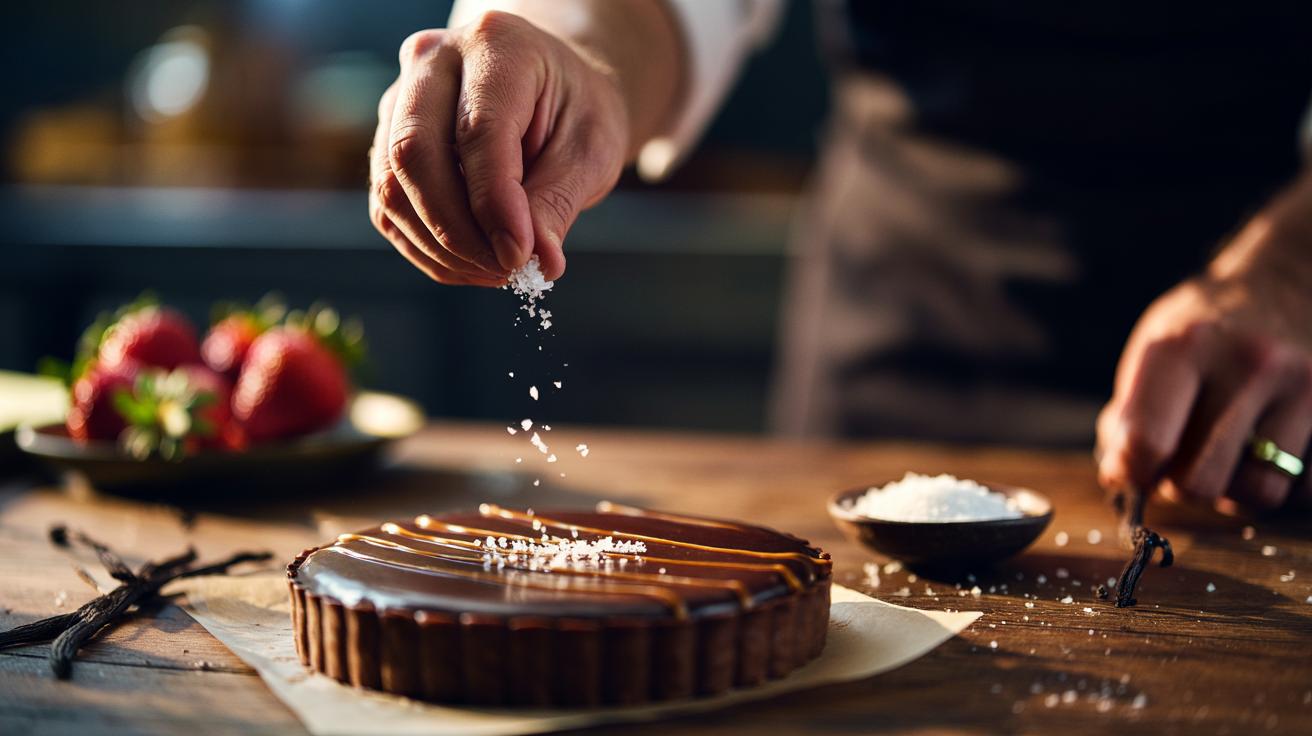
In a nutshell
- 🍬 A small pinch of salt heightens perceived sweetness by bitterness suppression and boosts retronasal aroma, making desserts taste richer without extra sugar.
- 🧂 Choose wisely: fine table/sea salt for even mixing, flaky finishing salt for crunch and contrast; avoid iodised salts in delicate puddings; adopt a simple two-salt setup.
- 🧪 Salt shapes texture and colour—guiding osmotic balance in fruit, moderating gluten, and enhancing the Maillard reaction for deeper, toffee-like notes.
- 🍓 Practical dosing: start small (a true pinch), mix fine salt into batters and custards, finish with flakes on brownies, ice cream, or fruit; taste as you go to avoid over-salting.
- 🧁 Fixes and tactics: if it skews salty, rebalance with unsalted cream, fruit, or syrup; use salt post-caramelisation, in ganache, and for fruit maceration to make flavours pop.
In British kitchens, a curious ritual endures: a pinch of salt slipped into pudding batter or chocolate sauce. Odd? Not once you taste the result. Salt heightens sweetness, sharpens aroma, and nudges hidden notes to the fore, from banana’s butteriness to dark chocolate’s cherry-like twang. It coaxes balance. It adds depth. It makes restraint feel indulgent. Scientists would say it modulates flavour perception; grandmothers might shrug: it just works. A tiny dose transforms dessert without piling on extra sugar. Here’s how that small crystal does big work, and how to wield it with confidence at home.
The Science Behind Salt’s Sweet Magic
Salt’s first trick is bitterness suppression. Our tongues host gustatory receptors tuned to sweet, sour, salty, bitter, and umami. A small amount of sodium blunts bitter signals and lifts sweet ones via a perceptual contrast effect. Vanilla custard tastes silkier; grapefruit sorbet loses its pithy edge. The chemistry is simple, the result dramatic. Reduce bitterness and sweetness appears to climb, even if sugar levels stay unchanged. That’s why a salted caramel can taste richer yet somehow cleaner than a sweets-only version.
There’s more going on. Salt amplifies retronasal aroma, the scent that wafts from food up the back of the nose as you chew. Enhanced saliva production and subtle shifts in pH help volatile compounds escape, so you register bigger wafts of cocoa, coffee, or toasted dairy. In ice cream, for instance, a pinch brings out the browned notes of caramelised milk solids, making each lick feel rounder and warmer on the palate.
Texture plays its part. Low doses of salt tweak osmotic balance in fruit, encouraging gentle juicing that intensifies flavour without sludge. In bakes, a measured amount moderates gluten, aiding tenderness, while also steadying the Maillard reaction that deepens crust colour and toffee-like complexity. Used judiciously, salt doesn’t shout; it edits, tightens, and focuses dessert flavour like a good sub-editor.
Choosing the Right Salt for Desserts
Not all salt behaves the same. Grain size, mineral profile, and purity change how quickly crystals dissolve and how flavour blooms. Fine table salt disperses fast in batters and custards, delivering even salinity. Sea salts carry trace minerals that add subtle savouriness. Flaky salts, beloved by pastry chefs, supply delicate crunch and bright, fleeting bursts—ideal as a finishing salt on brownies or truffles. Texture dictates timing: fine for mixing, flakes for the final flourish.
Purity matters too. Iodised salts can lend a faint metallic aftertaste in delicate desserts like panna cotta or meringue. Choose a clean, food-safe sea salt when nuance is key. Smoked or flavoured salts are potent—use sparingly, if at all, where their character won’t overpower. Think a whisper on maple ice cream, not a shovel in lemon tart. Aim for consistency: switching brands? Taste and adjust.
As a rule of thumb, keep a reliable fine salt for mixing and a high-quality flake for finishing. That two-salt setup covers almost every pudding scenario in a home kitchen and mirrors how many pastry sections operate. Small differences in crystal shape can mean big differences in perceived salinity, so measure by weight when precision counts.
| Salt Type | Texture | Best Use | Guide Dose |
|---|---|---|---|
| Fine table salt (non-iodised) | Small, uniform | Batters, custards, syrups | 1–2 g per 250 g flour or 500 ml dairy |
| Fine sea salt | Small, slightly mineral | Chocolate work, caramels | Pinch (0.5–1 g) per 100 g chocolate |
| Flaky sea salt (e.g., Maldon) | Large, light flakes | Finishing brownies, cookies, ice cream | 3–6 flakes per portion |
| Smoked salt | Flakes or coarse | Maple, coffee, toasted nut desserts | Use sparingly; taste as you go |
How to Add Salt: Practical Techniques
Start small. A true pinch—roughly 0.3–0.6 g—often suffices for sauces and ganaches. In cake batters, aim for about 1–2 g per 250 g flour. Whisk fine salt into dry ingredients for even distribution. For custards and curds, dissolve in warm dairy or juice before combining with eggs. Even dispersal prevents jarring pockets of salinity and keeps the effect seamless. In caramel, add salt after deglazing with cream, then adjust drop by drop; heat amplifies perceived sweetness, so taste at serving temperature.
Use salt tactically with fruit. Macerate strawberries or peaches with sugar and a scant sprinkle of fine sea salt; wait ten minutes. Juices bloom, acidity softens, perfume rises. Try a few flakes on grilled pineapple or roasted figs to make their honeyed notes sing. Chocolate loves salt too: stir a pinch into ganache, then finish truffles with two or three flakes for sparkle and snap.
Timing is everything. Blend during mixing for balance. Finish at the table for drama. A final dusting on warm cookies or a ripple atop semifreddo adds contrast in both taste and texture. Do not overdo it—once dessert tastes “salty,” you’ve crossed the line from enhancer to intruder. If you slip, add unsalted cream, more fruit, or a spoon of syrup to rebalance, then learn your ideal threshold.
Salt in pudding is no gimmick; it’s a precision tool for flavour. By damping bitterness, brightening aroma, and sharpening contrast, a tiny amount lets sweetness feel brighter while overall sugar can stay modest. It’s thrifty, modern, and deeply traditional all at once. Keep a fine salt for mixing and a flake for finishing, taste as you go, and let your palate lead. The right pinch turns good desserts into unforgettable ones. What will you try first: a salted honey custard, a flaked brownie crown, or a whisper of sea salt over strawberries and cream?
Did you like it?4.5/5 (21)