In a nutshell
- 🍚 Use a foil barrier under the lid to trap steam, smooth condensation, and create a stable microclimate for evenly cooked, cloud-like grains.
- 🧪 Follow the method: rinse (soak basmati briefly), bring to a simmer, add foil shiny side down with a tiny vent, cook on a low flame, then rest for 10 minutes before fluffing.
- 🔥 Choose a heavy-based saucepan and low heat; adjust for gas or induction. Water ratios and timings vary by rice type—start with the guide and tweak in 15–30 ml steps.
- 🛠️ Troubleshoot fast: too wet—reduce water or raise heat slightly; too dry or patchy—improve the seal, lower heat, and extend the steam rest to even moisture.
- 🌿 Tailor to type: basmati for long separations, jasmine for soft cling, short-grain for cohesion, and brown with extra time; add aromatics like cardamom or lemon for gentle fragrance.
In busy British kitchens, perfectly cooked rice can feel oddly elusive. A minute too long and it clumps; a splash too much water and it slumps. The fix is both thrifty and clever: a sheet of aluminium foil laid beneath the lid to trap steam and even out heat. This simple foil barrier curbs condensation drips, reduces boil-overs, and turns ordinary grains into cloud-like mounds. It works on gas, ceramic, or induction, and it doesn’t require a rice cooker, only a heavy-based saucepan and patience. Resist peeking; steam is your quiet ally. Use this trick once and you’ll wonder why your pan ever went without a shiny, crimped cap.
Why Foil Creates Fluff: The Science of Steam Trapping
Rice cooks by absorbing water and heat until the starches swell and set. The goal is controlled hydration. When a pan is lidded only, steam sneaks out around the rim and condensation forms into large droplets that can fall back in unevenly, creating patchy textures. Add a foil barrier and you change the microclimate. The foil hugs the rim, minimising escape routes and smoothing out condensation so tiny droplets recycle uniformly. That steadier environment means grains gelatinise at a similar pace from centre to edge.
There’s physics at play. Steam carries latent heat, more potent than dry air at the same temperature. Trapping it keeps the entire pot near a consistent, moist heat level while the burner ticks gently below. The foil also reduces convective currents that can jostle grains, which in turn prevents breakage and gumminess. You end up with separate, tender kernels.
Two bonuses seal the case. First, the foil dampens simmering noise and splutter, cutting those annoying hisses and minor boil-overs. Second, it shortens the path to doneness at a lower flame, saving energy while keeping flavour pure. Less fuss, more fluff.
The Step-by-Step Method: From Rinse to Rest
Measure 200–300g of rice (about 1–1½ cups). Rinse in cold water, swishing gently until it runs mostly clear; this removes excess surface starch that would make rice gluey. Drain thoroughly. For fragrant varieties like basmati, a 10–20 minute soak helps elongate grains; for jasmine, skip soaking to preserve character. Add rice to a heavy-based saucepan, pour in the correct water ratio (see table below), and season with a pinch of salt if you like.
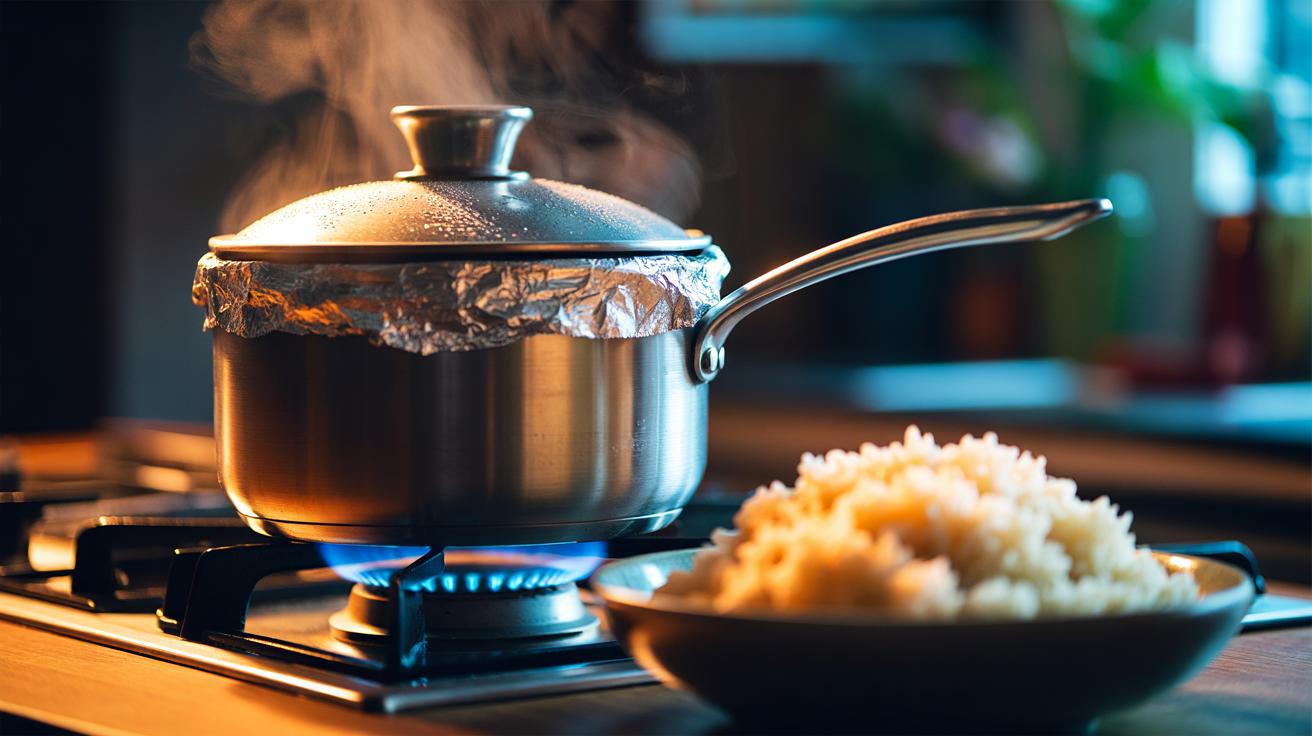
Bring to a brisk simmer over medium heat, uncovered. Bubbles will dance; that’s your cue. Lay a sheet of aluminium foil over the pot, shiny side down for marginally better heat reflection. Crimp it tightly around the rim, then place the lid on top to weight it. Leave a pinhead vent or the tiniest fold to prevent pressure from building and to curb boil-overs. Turn the heat right down to a bare simmer so you see minimal, lazy bubbling.
Cook for the indicated time. Do not lift the lid or stir; every peek dumps crucial steam and upsets timing. When time is up, switch off the heat and keep the foil barrier in place for 10 minutes. This rest lets moisture redistribute from outer, wetter layers to the core, finishing grains without wetness. Remove lid and foil, fluff gently with a fork, and serve immediately. The grains should be tender, distinct, and lightly glossy.
Ratios, Timings, and Pan Choices for UK Kitchens
Equipment matters. Choose a small to medium saucepan with a thick base (18–20 cm is ideal for up to 300g rice) and a well-fitting lid. A heavier base moderates hotspots on gas hobs and stabilises low output on induction. Glass lids are helpful but not essential because the foil does the sealing. Keep a kettle nearby to adjust water if needed during early trials, though you’ll soon find your sweet spot. Remember: rice expands; avoid overcrowding. A little headroom prevents spitting and helps the foil work cleanly.
Use these starting points and tweak for your brand and altitude (Britain’s low elevations keep things straightforward). The rest period is non-negotiable; it’s the quiet moment when good rice becomes great.
| Rice Type | Water Ratio (by volume) | Simmer Time | Steam Rest | Result |
|---|---|---|---|---|
| Basmati | 1 rice : 1.5 water | 10–12 min | 10 min | Long, separate, fragrant |
| Jasmine | 1 rice : 1.25–1.4 water | 10–11 min | 10 min | Soft, slightly clingy |
| Short-Grain | 1 rice : 1.1–1.2 water | 12–14 min | 10–12 min | Tender, cohesive |
| Brown (Long-Grain) | 1 rice : 1.8–2 water | 25–30 min | 10–15 min | Nutty, chewy |
Start at the low end of water for firmer grains; increase in 15–30 ml increments if your brand runs dry. On induction, you may need the smallest heat setting; on gas, use the smallest ring or a flame tamer for total control. A steady, whisper-quiet pot is the target—sound trumps sight when foil hides the action.
Troubleshooting and Variations: Brown, Basmati, Sticky Rice
If rice is too wet, you either added excess water or simmered too gently. Next time, reduce water by 15–30 ml per cup or nudge the heat slightly so the simmer is real, not hesitant. If it’s patchy or crunchy, the heat was too high or the seal weak. Re-crimp the foil firmly, ensure a tiny vent, and drop the flame. For a salvage fix, keep the lid on and rest longer; residual steam evens things out surprisingly well.
For brown rice, patience pays. The foil barrier keeps steam consistent over the longer cook, preventing surface drying while the bran softens. For basmati, rinsing and a brief soak give you needle-straight grains; the foil prevents the capricious condensation that can make the bottom mush and the top underdone. With short-grain, where a gentle cling is welcome, the foil keeps starches from washing into puddles that cause gluey zones.
Want gentle aromatics? Slip in a bruised cardamom pod or a strip of lemon zest. The sealed environment captures volatile oils without overpowering. Never stir once the lid is on; agitation breaks grains and releases unnecessary starch. And if you’re scaling up, use a wider pan rather than a taller one—more surface area, more even steaming, and the foil can do its best work.
There’s elegance in this low-tech hack: a crimped sheet of foil, a low flame, and time. The result is rice that tastes clean, feels buoyant, and behaves politely on the plate—ready for a curry, a stir-fry, or a bright salad. Let steam, not boiling, do the heavy lifting. Once you’ve nailed your preferred ratio and timing, the method becomes muscle memory. What will you cook first with your new, quietly powerful technique—aromatic basmati with grilled tandoori, a citrusy pilaf, or a silky mushroom rice to anchor a weeknight supper?
Did you like it?4.5/5 (23)