In a nutshell
- 🔬 The science of revival: reversing starch retrogradation with gentle heat; foil creates a steam chamber that re-gelatinises the crumb; a brief unwrapped finish triggers Maillard crisping.
- ⏱️ Quick method and timing: preheat to 200°C (400°F), wrap in foil; rolls/slices 5–6 minutes, baguettes 7–10, large sourdough 10–13; finish uncovered 1–3 minutes for a crackly crust.
- 🧰 Practical steps: light water spritz, snug seal to trap steam, check even warmth through foil, then crisp; serve immediately for peak aroma and texture.
- ⚠️ Common pitfalls: overheating under or without foil, over-wetting, and using the microwave (fast re-staling); never revive mouldy bread; repurpose rock-hard loaves as croutons or pangrattato.
- 🌱 Sustainability and versatility: reuse or recycle aluminium foil; swap in a Dutch oven, silicone bag, or paper bag; works for pitta and wraps; add oil/garlic after foil; smarter storage cuts food waste.
There’s a small domestic miracle hiding in your drawer of kitchen wraps. Wrap a tired loaf in aluminium foil, pop it into a preheated oven, and in minutes the crust crackles again while the crumb softens. No secret ingredients. No special gear. Just heat and a smart seal that traps moisture where it counts. The science is sound and the results are delicious. This quick fix can give rolls and sliced bread a fresh-baked feel in as little as five minutes. For heartier loaves, you might need a touch longer. Either way, it’s a brilliant way to rescue breakfast or elevate a midweek supper with almost zero waste.
How the Foil-and-Oven Method Works
Stale bread isn’t “old” so much as it is reorganised. As bread cools after baking, the starches undergo retrogradation—they recrystallise, squeezing out water and making the crumb firm and dull. Heat reverses that process. When you wrap bread in foil, you create a mini steam chamber that gently warms the interior and helps the starches gelatinise again. The water that migrated out of the starch network returns, loosening the crumb and restoring that springy bite. The trick puts moisture back where you want it—inside the bread, not just on the surface.
The foil does two jobs at once. First, it limits evaporation, so the loaf doesn’t dry out while it reheats. Second, it distributes heat more evenly, preventing scorched spots. For a proper crust, you simply remove the foil for the last minute or two. That brief exposure drives off surface moisture, prompting a quick crisping and a whisper of Maillard aroma. Think of it as a warm-up followed by a finishing sprint—controlled humidity first, then a blast of dry heat for texture.
Step-By-Step: From Stale to Supper-Ready
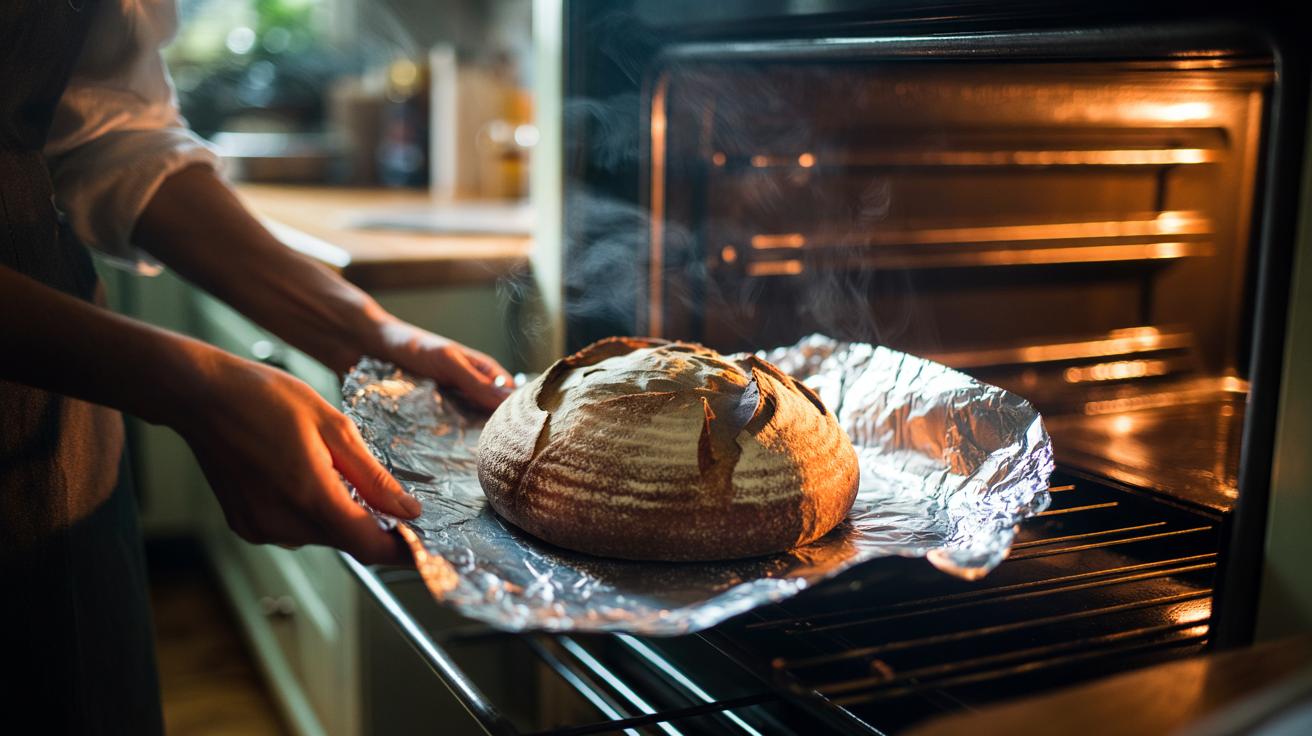
Preheat the oven to 200°C (180°C fan) or 400°F. If the bread is very dry, flick a few droplets of water on the crust or run your hands wet and pat the surface—lightly is the watchword. Wrap snugly in foil so no steam escapes. Bake until the loaf feels warmed through: small rolls or sliced pieces need around five minutes; larger loaves often want 7–12. For a crisp finish, open the parcel and return the bread unwrapped for 1–3 minutes. For rolls and cut pieces, five minutes total can be enough in a properly preheated oven.
| Bread Type | Prep | Oven Temp | Foil Time | Uncovered Finish | Typical Total |
|---|---|---|---|---|---|
| Rolls / Slices | Light spritz | 200°C / 400°F | 3–4 min | 1–2 min | 5–6 min |
| Small Baguette | Light spritz | 200°C / 400°F | 5–7 min | 2–3 min | 7–10 min |
| Large Sourdough | Optional spritz | 200°C / 400°F | 8–10 min | 2–3 min | 10–13 min |
A quick check helps: if the loaf feels heavy and evenly warm when squeezed through the foil, it’s ready to finish uncovered. If it still feels cool at the core, give it another minute before opening up. Serve immediately for peak aroma and texture.
Common Pitfalls and How to Avoid Them
Overheating is the classic mistake. Too long under foil and the crust turns leathery; too long without foil and the crumb dries out. Use a hot, preheated oven so reheating is swift, not drawn out. Avoid a drenching; a whisper of water is enough to fuel steam without making the crust soggy. Think controlled humidity first, then controlled dryness. If the base browns too fast, shift the tray up a shelf or use a doubled sheet as a heat buffer.
Beware the microwave. It softens bread in seconds, but the crumb quickly toughens as the starches re-crystallise again—often within minutes. For lasting results, the oven-and-foil combo wins. Know when to stop, too. If bread is rock-hard all the way through, save the energy and turn it into croutons, pangrattato, or a panzanella salad. And one non-negotiable: do not reheat bread that shows any sign of mould. The foil method revives texture and aroma; it doesn’t make unsafe bread safe.
Beyond Bread: Clever Variations and Sustainability
The technique scales and adapts. For a baguette that’s lost its swagger, rehydrate lightly, foil, reheat, then finish bare for a brittle, singing crust. Flatbreads like pitta or wraps respond beautifully—30–60 seconds under foil, then a flash uncovered. Thick country loaves are best revived whole or in hefty chunks; wafer-thin slices dry too fast. Want subtle flavour? After the foil stage, brush with olive oil and crushed garlic, then crisp briefly for instant garlic bread. The method rescues texture first, then lets you layer flavour.
Foil isn’t the only option. A lidded Dutch oven or a reusable silicone bag traps steam in much the same way, and a paper bag can work in a pinch. If you use foil, choose heavier grades, wipe clean, and reuse until it tears; then recycle where facilities allow. Pairing this fix with smart storage—bread kept cut-side down on a board, not sealed in plastic—reduces waste dramatically. It’s a small, conscious ritual that keeps good loaves tasting their best while trimming your bin and your budget.
Five minutes, one wrap, and a hot oven: that’s all it often takes to turn a dispiriting heel into a warm, fragrant slice worth lingering over. The reason it works is simple, even elegant—starch chemistry and gentle, trapped steam. The payoff is immediate. The habit sticks. Next time a baguette fades by teatime, you’ll know exactly what to do. Will you try the foil method as-is, or bend it to your kitchen with a Dutch oven, a silicone bag, or a favourite finishing brush of oil and herbs?
Did you like it?4.5/5 (22)