In a nutshell
- 🎯 Rice rapidly releases starch (amylose + amylopectin) at gelatinisation temperatures, delivering dairy-free, gluten-free creaminess in under 10 minutes without dulling flavour.
- 🥄 Two quick methods: slurry (1–2 tbsp ground white rice) or blitz (40–60 g cooked rice per litre), then a 1–2 minute simmer to set the starch.
- 🍚 Rice choices matter: Arborio/short-grain for plush gloss, jasmine/basmati for light silk; avoid brown for speed; start small to prevent a pasty texture.
- 🧂 Technique tips: blend off heat with an immersion blender, salt after thickening (starch shifts perceived seasoning), and loosen leftovers with stock when reheating.
- 🌿 Flavour ideas: tomato–basil with olive oil, mushroom umami boost, leek–potato minus cream, lemony chicken; global twists like ginger–carrot, squash + coconut, and harira-style.
There’s a cook’s trick hiding in your cupboard: rice. In a pinch, this small grain can make any soup taste richer, feel thicker, and look glossier. No dairy. No roux. Just the quick release of rice starch that turns thin broths into velvety bowls in minutes. Think weeknight tomato, speedy chicken, or thrifty veg scraps simmered into something lush. The magic is fast and repeatable. With the right method, you can achieve a creamy, stable texture in under 10 minutes. Below, I explain why it works, how to do it two ways, and which rice to choose when you want silk without heaviness.
Why Rice Makes Soup Silky So Fast
Rice is loaded with starch. When heated in liquid, those starch granules swell and leak amylose and amylopectin. This creates a gentle, soup-friendly thickening that clings to vegetables and meat without turning gluey. It’s the same principle behind risotto’s creaminess, just applied to broth. Because the granules are small and reactive, they work quickly, especially when you blitz cooked rice or whisk in a slurry. The result? A fine-bodied texture that reads as creamy on the palate. It’s a clean flavour lift too, as rice adds body but stays largely neutral.
Technically, the sweet spot is when starch hits its gelatinisation zone: hot enough to swell, not so hot it breaks down. That means a brisk simmer, then a short blend or whisk, and a minute or two to settle. You don’t need much—tiny quantities transform a whole pot. Because the effect comes from starch rather than fat, it’s a boon for dairy-free and gluten-free cooking. And unlike flour thickeners, rice doesn’t dull colours or cloud flavours as much, leaving tomato soups vibrant and mushroom broths glossy.
Two Quick Methods: Slurry or Blitzed Grains
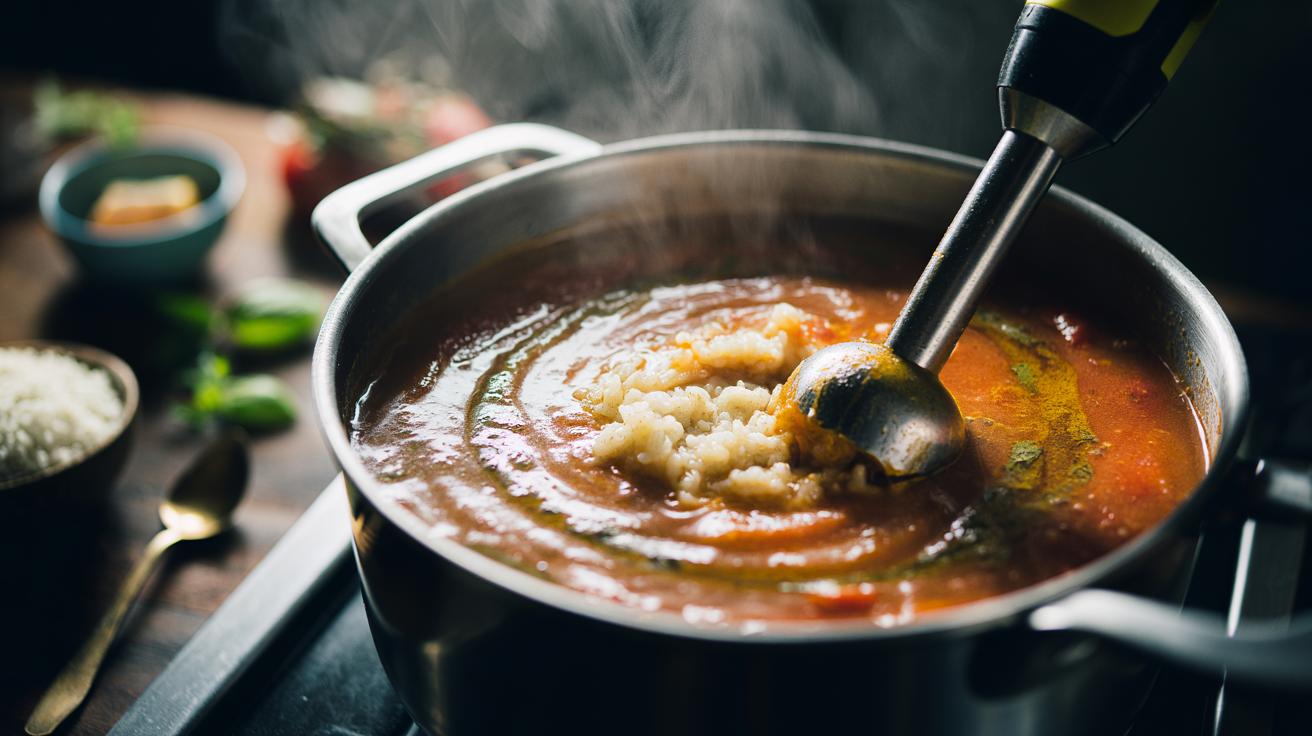
Method one, the slurry: take 1–2 tablespoons of very finely ground white rice (or crush dry grains in a spice grinder) and whisk with hot stock to make a smooth paste. Stir this into your simmering soup and cook 2–4 minutes, stirring. It thickens fast, then stabilises as it rests. Method two, the blitz: add 40–60 g of cooked white rice per litre of soup, take the pan off the heat, and hit it with an immersion blender for 20–45 seconds until the texture rounds out. Return to a bare simmer for one minute to set the starch. Both paths deliver creaminess in well under 10 minutes.
Use these guide ratios as a starting point, adjusting to taste and thickness. Small additions first; you can always add more. For a glossy, pourable soup, stop blending while a few micro-particles remain. For luxurious velvet, blend fully then finish with a knob of olive oil or a squeeze of lemon to brighten the palate.
| Rice Type | Per Litre of Soup | Prep | Time to Thicken | Texture Result |
|---|---|---|---|---|
| Arborio/risotto | 30–50 g cooked | Blitz | 2–4 min | Very creamy, glossy |
| Jasmine/basmati (white) | 40–60 g cooked | Blitz | 3–5 min | Light, silky |
| Ground white rice | 1–2 tbsp | Slurry | 2–4 min | Even thickening |
| Leftover rice | 40–70 g | Blitz | 3–6 min | Balanced body |
Choosing the Right Rice and Avoiding Pitfalls
For speed, reach for white rice. Its starch is readily available and blends cleanly. Short- and medium-grain types (Arborio, pudding rice) give more plushness per gram thanks to a higher amylopectin content. Jasmine and basmati deliver a lighter finish that suits brothy soups or those with delicate herbs. Brown rice can work, but it’s slower and the bran adds graininess. If your goal is creaminess in minutes, brown rice isn’t the best choice.
Avoid common snags. Overdo the rice and you’ll get a pasty mouthfeel as it cools; underdo it and the soup reads thin. Begin modestly, blend briefly, then reassess after a one-minute simmer. If blending hot soup, remove from the heat and keep the head of the stick blender submerged to prevent splashes. Salt after thickening, not before: starch changes perceived seasoning, often muting it slightly. And if leftovers are destined for the fridge, thin with a splash of stock when reheating—starch continues to set as it chills. Control the ratio, and the rice works for you, not against you.
Ideas for Flavour Pairings and Styles
Tomato soup becomes cafe-luxurious when blitzed with a spoonful of cooked rice, then finished with olive oil and torn basil. Mushrooms love the plush support; rice rounds bitterness and lets umami sing. Try leek-and-potato with a rice slurry instead of cream for a lighter lunch, or fold leftover roast chicken into a lemony, rice-thickened broth for a quick, soothing supper. It’s an elegant way to stretch scraps into something special.
Go global. Add a jasmine-rice slurry to a ginger-carrot soup, then top with chilli crisp. Swirl coconut milk sparingly into a rice-thickened squash soup for layered richness without heaviness. For a nod to harira, add lentils and coriander to a tomato base and use blitzed rice to bind. Finish bright. A squeeze of lemon, a dash of vinegar, or grated Parmesan on dairy-friendly days. The rice provides the canvas; herbs, acid, and oils paint the final shine. In short: small grain, big upgrade, remarkably little effort.
Rice turns thin soup into comfort in a flash, letting you dial in body without clouding flavours or leaning on cream. It’s cheap, reliable, and friendly to most diets, which makes it ideal for the home cook and the weeknight rush alike. Keep a jar of ground rice or a tub of leftover grains ready, and your next pot will transform on cue. Once you taste the difference, it’s hard to go back. What soup will you try first, and which rice will you choose to craft your own signature texture?
Did you like it?4.5/5 (22)