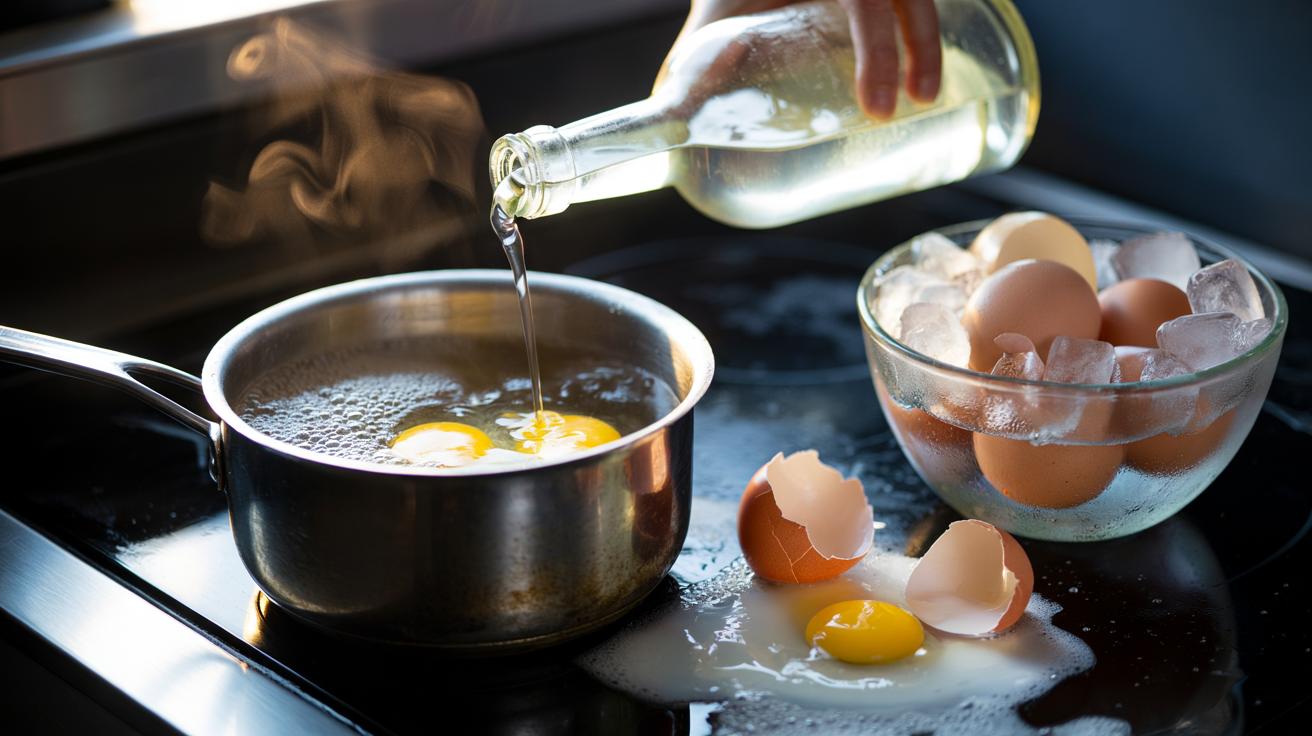
In a nutshell
- 🥚 Science that works: Vinegar’s acetic acid gently etches the shell’s calcium carbonate and loosens the shell–membrane interface, helping whites set cleaner for effortless peeling.
- 🍳 Simple method: Cover eggs with cold water, add 1–2 tablespoons of white vinegar per litre, bring to a gentle simmer, then transfer straight to an ice bath for 10 minutes; peel from the wide end under a thin stream of water.
- ⏱️ Reliable timings: Medium soft 6–7 min, Large jammy 8–9 min, Large firm 10–12 min—kept at a steady, gentle simmer for consistent texture without chalky yolks.
- 🔧 Controls variables: Vinegar reduces the “fresh egg penalty,” helps seal small cracks, salt is optional, add 30–60 seconds at altitude/XL eggs, and store peeled eggs up to three days with a damp paper towel.
- ✅ Cleaner results, no fuss: Cheap, repeatable, and flavour-neutral at the recommended dose, the acidity trick delivers easy peeling and tender whites every time.
Eggs are simple; peeling them isn’t. A perfect shell should slip off in broad flakes, leaving a glossy white ready for soldiers, salads, or snacks. The most reliable shortcut costs pennies: a splash of vinegar in the pot. By tweaking the water’s chemistry, this humble staple changes how the shell and membrane behave, turning a notorious kitchen nuisance into a clean, swift ritual. It’s not a chef’s secret—just mild acidity doing precise work. Below, we unpack the science, the method, and the variables, so you can make easy-to-peel boiled eggs—soft, jammy, or firm—without the swearing or the waste.
Why Acidity Helps: The Science Behind Easy-Peel Eggs
Vinegar brings one crucial player to the party: acetic acid. Eggshells are largely calcium carbonate. When you add a small amount of acid to the cooking water, it gently reacts with that mineral surface, lightly etching it. This micro-etching reduces the shell’s grip on the thin inner membrane that clings to the white. Loosen the membrane and the peel slides off in sheets. Think of it as scoring a label before you lift it—less tearing, less pitting, fewer ugly divots.
There’s more. The outermost albumen proteins—those closest to the shell—coagulate differently when the pH of the surrounding water drops a touch. In acidic conditions, they set just a bit tighter and pull away from the membrane sooner as the egg heats, reducing that glue-like bond. And if a hairline crack appears as the water rises to a simmer, the acid helps instantly coagulate any escaping white, sealing the fissure before it frays. Small change in chemistry, big improvement in results. While some cooks chase alkalinity to shift the white’s pH, vinegar’s gentle acidity targets the shell–membrane interface—the place where peeling succeeds or fails.
Step-By-Step Method: From Pan to Ice Bath
Choose a saucepan that holds eggs in a single layer. Cover with cold water by about 2–3 cm. Add 1–2 tablespoons of white vinegar per litre of water—enough to be effective, not so much that you’ll taste it. Bring the pot to a gentle simmer over medium heat. Not a raging boil; bubbles should be lively but controlled. When it reaches that steady simmer, start timing according to your preferred doneness. Keep the heat steady. Consistency beats speed every time.
When the timer goes, use a slotted spoon to lift eggs straight into an ice bath. Chill for at least 10 minutes. This stops carryover cooking, firms the white for cleaner peeling, and creates mild steam pockets under the shell as the interior contracts. Crack each egg around the middle, roll lightly to create a constellation of fractures, then peel under a thin trickle of water for a slip-and-slide effect. If an egg resists, start at the wider end where the air cell lives—the membrane often lifts more easily here.
| Egg Size | Doneness | Time at Gentle Simmer | Texture Notes |
|---|---|---|---|
| Medium | Soft | 6–7 min | Liquid yolk, tender white |
| Large | Jammy | 8–9 min | Custardy center, no run |
| Large | Firm | 10–12 min | Fully set, not chalky |
Practical Variables: Freshness, Cracks, and Seasoning
Egg age matters. Very fresh eggs, prized for poaching, are notorious for clinging shells. Vinegar levels the playing field. By subtly softening the shell and loosening the inner membrane, it reduces the penalty of freshness without asking you to rearrange your shopping. Still, if you can, use eggs that have rested in the fridge for a few days. The air cell enlarges, a bonus for peeling. Vinegar is the safety net; age is the head start.
Cracks happen. A gentle simmer mitigates trauma, but if a shell does split, vinegar comes to the rescue, instantly tightening any escaping white. Add salt if you like—about 1 teaspoon per litre—to season and slightly raise boiling point, though the thermal effect is minimal in a home kitchen. Worried about flavour? Keep to 1–2 tablespoons of white vinegar per litre; you won’t notice it after the ice bath. For high altitudes or extra-large eggs, add 30–60 seconds to the timings. Store peeled eggs in a sealed container with a damp paper towel for up to three days. Season after peeling; a sprinkle of flaky salt and a crack of pepper wake up even the firmest yolks.
With a dash of vinegar and a calmer simmer, the stubborn peel problem simply evaporates. The chemistry is elegant, the technique unfussy, and the results consistent across brands, sizes, and supermarket quirks. Use acidity to loosen the membrane, cool quickly to set the structure, and peel smart from the wide end. That’s the whole playbook. The next time you plan a Nicoise, a lunchbox snack, or a runny-yolk breakfast, will you try the vinegar method—and what tiny tweak will you adopt to make it fully your own?
Did you like it?4.8/5 (21)